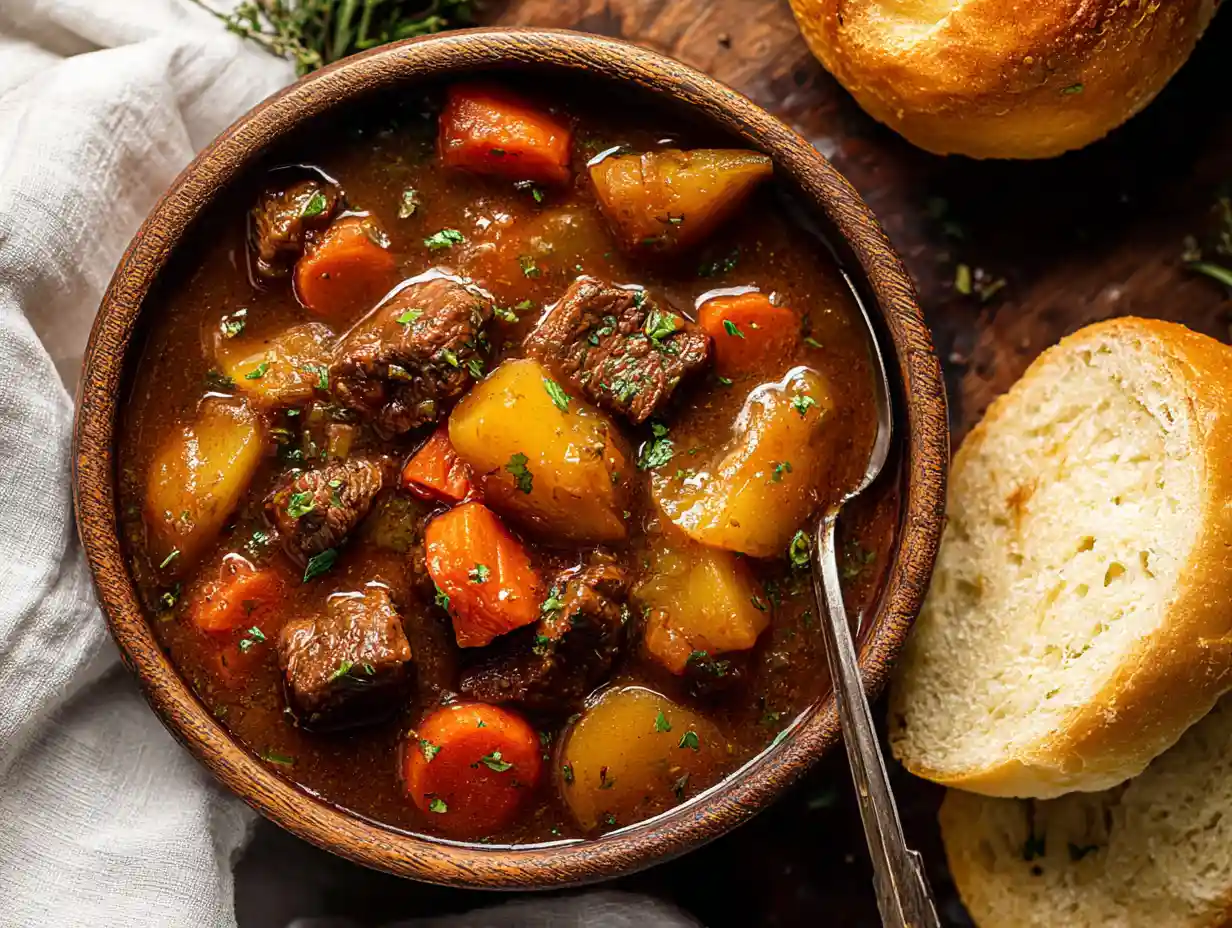
Oh, hello there, lovely! I am so thrilled you’ve stopped by Delish Map today. There’s something truly magical about a simmering pot on the stove, isn’t there? Today, I am incredibly excited to share one of my all-time favorite recipes: a classic Old Fashioned Beef Stew. It’s the kind of dish that wraps you in a warm hug, full of rich flavors and tender ingredients that speak to the soul.
I promise to guide you every step of the way, ensuring your stew turns out perfectly comforting and absolutely delicious.
Table of Contents
What Makes a Beef Stew “Old Fashioned”?
For me, an “old fashioned” beef stew evokes images of simpler times, hearty meals, and flavors that have stood the test of time. It’s all about embracing traditional techniques and robust ingredients. We are talking about using humble, tougher cuts of beef, like stewing meat, which, with long, slow simmering, transform into incredibly tender morsels.
Typical vegetables, such as carrots, potatoes, and onions, are always at the heart of the stew. This slow cooking method is really the secret; it allows all those beautiful flavors to meld together, creating a depth that just can’t be rushed. It’s comforting, familiar, and utterly satisfying.
Why This Old Fashioned Beef Stew Recipe is Your New Favorite
I truly believe this recipe for Old Fashioned Beef Stew will quickly become a cherished favorite in your kitchen. I’ve poured my heart into crafting a version that is both approachable and incredibly flavorful. This isn’t just another stew recipe; it’s a guide to making something truly special.
- Unrivaled Depth of Flavor: My recipe emphasizes building layers of flavor right from the start, from perfectly seared beef to careful deglazing, ensuring every spoonful is rich and satisfying.
- Comprehensive Guidance: I provide detailed instructions that break down each step, making it easy for even novice cooks to achieve a restaurant-quality stew at home.
- Versatile Cooking Methods: I’ll show you how to adapt this delicious stew for various kitchen tools, so you can enjoy it whether you prefer the stovetop, a slow cooker, or an Instant Pot.
- Expert Troubleshooting: I anticipate common questions and offer clear, helpful tips to navigate any kitchen challenges, ensuring your stew always turns out just right.
The Secret to Tender Beef: Choosing and Preparing Your Cuts
Achieving melt-in-your-mouth tender beef is fundamental to a truly great old-fashioned stew, and it all starts with the right cut. I always recommend beef stewing meat, often from the chuck primal, for its rich marbling and connective tissue. While these cuts can be tough initially, the magic happens during long, slow cooking; the collagen breaks down into gelatin, creating that wonderful, succulent texture we all crave. You can serve this as one of many amazing main dishes.
Proper preparation is also key. Before cooking, I always trim any excess fat and cut the beef into uniform inch cubes, which ensures even cooking. Searing the beef is a non-negotiable step for me. It creates a beautiful browned crust, developing deep, complex flavors through the Maillard reaction. I make sure to do this in batches, never overcrowding the pot, so each piece gets that perfect golden sear.
Essential Ingredients for Our Old Fashioned Beef Stew
Here is a list of the exact ingredients I use to create this wonderful Old Fashioned Beef Stew. I find that using good quality, fresh ingredients makes all the difference in the final flavor.
- 1/4 cup all-purpose flour
- 1/4 teaspoon freshly ground pepper
- 1 pound beef stewing meat, trimmed and cut into inch cubes
- 5 teaspoons vegetable oil
- 2 tablespoons apple cider vinegar
- 1 cup beef broth
- 1 tablespoon apple cider vinegar
- 3 1/2 cups beef broth, homemade or low-sodium canned
- 2 bay leaves
- 1 medium onion, peeled and chopped
- 5 medium carrots, peeled and cut into 1/4-inch rounds
- 2 large baking potatoes, peeled and cut into 3/4-inch cubes
- 2 teaspoons salt
Ingredient Notes & Smart Substitutions
I love how versatile stew recipes can be, allowing for a little wiggle room with ingredients. Here are some of my notes and favorite substitutions:
For the beef, I always reach for stewing meat from the chuck, but short ribs or even tougher cuts from the round can also work beautifully. Just remember, the tougher the cut, the longer it will need to simmer to achieve that wonderful tenderness.
For potatoes, I love baking potatoes for their ability to absorb flavor and soften perfectly, but Yukon Golds are a fantastic alternative. If you are looking for a different texture, red potatoes hold their shape a bit more.
The flour acts as my primary thickener and helps create that lovely coating on the beef. If you are looking for a gluten-free option, a cornstarch slurry works wonderfully, or you can use a gluten-free all-purpose flour blend.
Here’s a quick guide for some common substitutions:
| Ingredient | Smart Substitution | Notes |
|---|---|---|
| Beef Stewing Meat | Chuck roast, short ribs, top round | Adjust cooking time; chuck is ideal for tenderness and flavor. |
| Baking Potatoes | Yukon Gold, Red Potatoes, Sweet Potatoes | Yukon Golds are similar; reds hold shape; sweet potatoes add sweetness. |
| Carrots | Parsnips, Celery, Turnips | Add depth and different textures. |
| Onion | Leeks, Shallots | Leeks offer a milder onion flavor, shallots are sweeter. |
| Beef Broth | Chicken broth, vegetable broth | Chicken or vegetable broth are lighter |
| Apple Cider Vinegar | Balsamic vinegar | Adds acidity and brightness; balsamic adds a hint of sweetness. |
| All-Purpose Flour | Cornstarch (slurry), Gluten-free flour blend | Use a slurry for gluten-free thickening; GF flour for coating. |
Your Kitchen Arsenal: Recommended Equipment
To make this Old Fashioned Beef Stew, you really don’t need a lot of fancy equipment, which is something I truly appreciate about classic recipes. My absolute favorite tool for stew is a good Dutch oven.
Its heavy bottom and tight-fitting lid are perfect for even heat distribution and long, slow simmering, which is crucial for tenderizing the beef and developing rich flavors. If you don’t have a Dutch oven, a large, heavy-bottomed pot or oven-safe stockpot with a lid will work just as well.
Beyond that, you’ll need some basic tools: a large bowl for tossing the beef, a wooden spoon for stirring and scraping up those delicious browned bits, and a ladle for serving. A sharp knife and a cutting board are also essential for prepping your vegetables and beef.
If you’re looking for a warm drink to pair with this recipe, try this Amazing Pumpkin Spice Hot Chocolate Recipe.
Step-by-Step: Crafting Your Perfect Old Fashioned Beef Stew
Here are the exact steps I follow to create this comforting Old Fashioned Beef Stew. Take your time with each one, and you’ll be rewarded with a truly incredible meal.
- Combine the flour and pepper in a bowl, add the beef and toss to coat well. Heat 3 teaspoons of the oil in a large pot. Add the beef a few pieces at a time; do not overcrowd. Cook, turning the pieces until beef is browned on all sides, about 5 minutes per batch; add more oil as needed between batches.
- Remove the beef from the pot and add the apple cider vinegar, beef broth, and an additional tablespoon of apple cider vinegar. Cook over medium-high heat, scraping the pan with a wooden spoon to loosen any browned bits. Add the beef, beef broth and bay leaves. Bring to a boil, then reduce to a slow simmer.
- Cover and cook, skimming broth from time to time, until the beef is tender, about 1 1/2 hours. Add the onions and carrots and simmer, covered, for 10 minutes. Add the potatoes and simmer until vegetables are tender, about 30 minutes more. Add broth or water if the stew is dry. Season with salt and pepper to taste. Ladle among 4 bowls and serve.
Adapting Your Old Fashioned Beef Stew: Stovetop, Slow Cooker, & Instant Pot
While I love making this stew on the stovetop, I know life gets busy, and sometimes we need options! This Old Fashioned Beef Stew recipe is wonderfully adaptable to different cooking methods.
For the Slow Cooker: I always recommend searing the beef on the stovetop first, as outlined in step 1 of my recipe. This crucial step locks in flavor that you just can’t get otherwise. After searing, transfer the beef to your slow cooker.
Then, deglaze the pot with the apple cider vinegar and beef broth mixture, scraping up all those delicious browned bits, and add this liquid to the slow cooker along with the remaining beef broth and bay leaves. Cook on low for 6-8 hours or on high for 3-4 hours, or until the beef is fork-tender. Add the onions and carrots during the last hour of cooking, and the potatoes for the final 30-45 minutes to prevent them from becoming mushy.
For the Instant Pot: The Instant Pot is fantastic for speeding up cooking times while still achieving tender results. Again, I would sear the beef directly in the Instant Pot using the “Sauté” function, following step 1. Then, deglaze the pot with the apple cider vinegar and beef broth mixture. Add the beef, remaining beef broth, bay leaves, onions, and carrots.
Secure the lid and cook on high pressure for 35-40 minutes for chuck stew meat, followed by a natural pressure release for 10-15 minutes before manually releasing any remaining pressure. Once depressurized, add the potatoes and use the “Sauté” function again to simmer until the potatoes are tender, about 10-15 minutes. Always ensure there’s enough liquid to come to pressure, usually around 2-3 cups.
Elevate the Flavor: Tips for the Best Old Fashioned Beef Stew
I always say the little details make a big difference in the kitchen, and this stew is no exception! Here are a few of my favorite tips to really boost the flavor of your Old Fashioned Beef Stew:
First, deglazing the pot after searing the beef is absolutely crucial. Those browned bits stuck to the bottom of the pot are pure flavor gold. Using a splash of apple cider vinegar or broth to scrape them up releases all that deliciousness back into your stew.
The bay leaves I include are not just for show; they infuse a subtle, herbaceous note that adds complexity. I often add a little extra balsamic vinegar along with the initial deglazing liquid; it introduces an amazing depth and acidity that brightens the whole dish.
Finally, right before serving, I love to stir in a handful of fresh chopped parsley. Its vibrant green color and fresh flavor really lift the stew, adding a beautiful brightness. More main dish recipes can be found here.
Achieving Perfect Consistency: Thickening Your Beef Stew
The consistency of your Old Fashioned Beef Stew is just as important as its flavor. My recipe uses all-purpose flour to coat the beef, which naturally thickens the stew as it cooks. As the stew simmers, the starch in the flour is released, creating a rich, velvety texture.
If you find your stew is too thin at the end of cooking, don’t worry! You can easily fix it. I like to remove about 1/2 cup of the hot broth, let it cool slightly, and then whisk in 1 tablespoon of cornstarch or an additional tablespoon of flour until smooth. Stir this slurry back into the simmering stew and cook for another few minutes until it thickens.
For a slightly different approach, you can mash some of the cooked potatoes and stir them back into the stew; this naturally thickens it while adding extra creaminess.
If your stew is too thick, simply add a little extra beef broth or water, a quarter cup at a time, until it reaches your desired consistency. Remember to taste and adjust the seasoning after adding more liquid.
The Art of Veggies: Selection & Timing for Your Old Fashioned Beef Stew
The vegetables in my Old Fashioned Beef Stew are just as important as the beef itself, contributing to both flavor and texture. I typically use onions, carrots, and potatoes, as they are classic choices that complement the rich beef perfectly. Parsnips, celery, or even mushrooms also make wonderful additions if you want to diversify.
For preparation, I cut my carrots into 1/4-inch rounds and my potatoes into 3/4-inch cubes. This size ensures they cook through evenly and are tender without becoming mushy. The timing of adding your vegetables is crucial. I add the heartier vegetables, like onions and carrots, after the beef has had a good head start on tenderizing.
This gives them enough time to soften and meld their flavors into the stew without turning to complete mush. The potatoes go in later, ensuring they are perfectly tender but still hold their shape beautifully by the time the stew is ready to serve. Adding them too early often results in them disintegrating into the broth.
According to Iowa State University’s Spend Smart Eat Smart program, a serving size of beef stew is about 1 1/2 cups, containing approximately 280 calories. Adding them too early often results in them disintegrating into the broth.
Troubleshooting Your Old Fashioned Beef Stew
Even for experienced home cooks, sometimes things don’t go exactly as planned, and that’s perfectly okay! Here’s how I address common issues with Old Fashioned Beef Stew:
- Stew that’s too thin or too thick: If it’s too thin, I create a slurry with 1 tablespoon of cornstarch (or flour) mixed with a little cold water or broth, then stir it into the simmering stew until thickened. If it’s too thick, I simply add more beef broth, a quarter cup at a time, until I reach the desired consistency.
- Beef that’s still tough: This usually means it hasn’t cooked long enough. I just keep simmering it, covered, over low heat. Patience is key; it will eventually become tender.
- Bland flavor: A common fix for blandness is to add more salt and freshly ground pepper. I also consider a splash of additional apple cider vinegar, a dash of Worcestershire sauce, or even a tiny pinch of sugar to balance flavors. Fresh herbs stirred in at the end can also brighten things up.
- Vegetables that are overcooked or undercooked: If they’re overcooked, I make a mental note to add them later next time. If they’re undercooked, I simply let the stew simmer a bit longer, checking every 5-10 minutes until they reach the perfect tenderness.
Serving & Pairing Suggestions for Your Hearty Stew
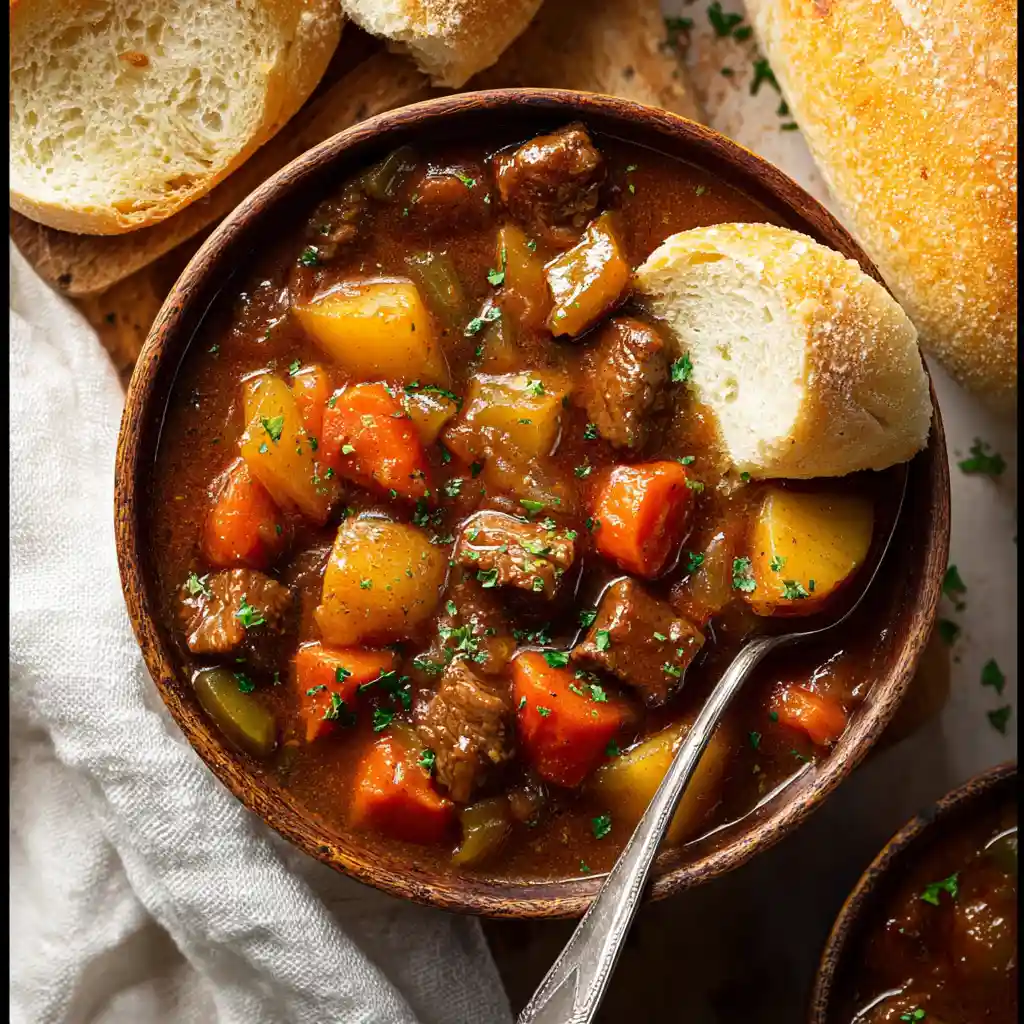
Once your Old Fashioned Beef Stew is ready, serving it is half the fun! I love to ladle generous portions into warm bowls. This hearty stew is a meal in itself, but it truly shines when accompanied by a few simple additions. For another recipe using similar flavors, take a look at this Amazing Homemade Cranberry Sauce Recipe.
My absolute favorite pairing is a big chunk of crusty bread, perfect for soaking up every last bit of that rich, flavorful gravy. Think a rustic sourdough, a crusty baguette, or even some homemade cornbread. I also enjoy serving it with a light, simple green salad dressed with a vinaigrette; its freshness offers a lovely contrast to the richness of the stew.
Storing & Reheating Your Leftover Old Fashioned Beef Stew
One of the best things about Old Fashioned Beef Stew is that it often tastes even better the next day! I always make extra so I can enjoy the leftovers.
To store, I let the stew cool completely before transferring it to airtight containers. It will keep beautifully in the refrigerator for up to 3-4 days. For longer storage, this stew freezes wonderfully. I portion it into freezer-safe containers or heavy-duty freezer bags, removing as much air as possible. It will last in the freezer for up to 3 months. When I’m ready to enjoy it again, I simply thaw it in the refrigerator overnight.
To reheat, I transfer the stew to a saucepan and gently warm it over medium-low heat on the stovetop, stirring occasionally, until it’s heated through. If it seems a little thick after reheating, I’ll add a splash of beef broth or water to loosen it up.
Dietary Adaptations for Your Old Fashioned Beef Stew
I always want to make sure my recipes can be enjoyed by everyone, so here are a few simple ways to adapt this Old Fashioned Beef Stew for different dietary needs:
For a gluten-free version, I skip coating the beef in all-purpose flour. Instead, I brown the beef as directed, and then, at the end of cooking, I thicken the stew with a cornstarch slurry. For this, I whisk 2 tablespoons of cornstarch with 1/4 cup cold water or broth, then stir it into the simmering stew and cook until thickened. You could also use a gluten-free all-purpose flour blend to coat the beef, just ensure it’s suitable for cooking.
For a low-sodium stew, I always opt for low-sodium beef broth and taste as I go, adding salt sparingly until I reach the desired flavor. Herbs, spices, and a little extra vinegar can add a lot of flavor without relying on sodium.
FAQs about Old Fashioned Beef Stew
I get a lot of questions about stew, and I’m always happy to help! Here are some common ones:
How can I make my “Old Fashioned Beef Stew” more flavorful?
My best advice is to always sear your beef thoroughly, deglaze the pan with apple cider vinegar and don’t be shy with seasonings like salt, pepper, and bay leaves. Adding a splash of Worcestershire sauce or a little tomato paste early on can also deepen the flavor profile.
What kind of beef is best for stew?
I always recommend beef stewing meat, often labeled as chuck or chuck roast. It has a great balance of lean meat and connective tissue, which breaks down beautifully during long, slow cooking, resulting in incredibly tender and flavorful beef.
What other vegetables can I add to beef stew?
The possibilities are endless! I love adding parsnips, celery, mushrooms, peas (stirred in at the very end), or even sweet potatoes for a touch of sweetness. Just consider their cooking times and add them accordingly.
Can I prepare this stew ahead of time?
Absolutely! This stew is a fantastic make-ahead meal. The flavors often deepen and meld even more after a day or two in the refrigerator. Just cool it completely before storing.
What are the best toppings for beef stew?
While I love it plain, fresh chopped parsley or chives add a burst of freshness and color. A dollop of sour cream or a sprinkle of shredded cheddar cheese can also be a delicious addition for a richer touch.
Conclusion
There you have it, my friends! My cherished Old Fashioned Beef Stew recipe, made with so much love and a little bit of Delish Map magic. I hope this guide has inspired you to gather your ingredients and fill your kitchen with the comforting aromas of a truly classic dish. There’s nothing quite like the warmth and satisfaction that comes from sharing a homemade meal, and this stew, for me, embodies that feeling perfectly.
I can’t wait to hear how your stew turns out! Please feel free to leave a comment below with any questions, your own favorite stew tips, or just to share your cooking triumphs. Happy cooking, and thank you for being here with me at Delish Map!
Love comforting classics like this? Follow us on Pinterest for more cozy, homemade recipes that warm the heart and soul.

Easy And Flavorful Old Fashioned Beef Stew Recipe
Ingredients
Equipment
Method
- Combine the flour and pepper in a bowl, add the beef and toss to coat well. Heat 3 teaspoons of the oil in a large pot. Add the beef a few pieces at a time; do not overcrowd. Cook, turning the pieces until beef is browned on all sides, about 5 minutes per batch; add more oil as needed between batches.
- Remove the beef from the pot and add the apple cider vinegar, beef broth, and an additional tablespoon of apple cider vinegar. Cook over medium-high heat, scraping the pan with a wooden spoon to loosen any browned bits. Add the beef, beef broth and bay leaves. Bring to a boil, then reduce to a slow simmer.
- Cover and cook, skimming broth from time to time, until the beef is tender, about 1 1/2 hours. Add the onions and carrots and simmer, covered, for 10 minutes. Add the potatoes and simmer until vegetables are tender, about 30 minutes more. Add broth or water if the stew is dry. Season with salt and pepper to taste. Ladle among 4 bowls and serve.
Nutrition
Notes
Tried this recipe?
Let us know how it was!Printable Recipe Card
Want just the essential recipe details without scrolling through the article? Get our printable recipe card with just the ingredients and instructions.