
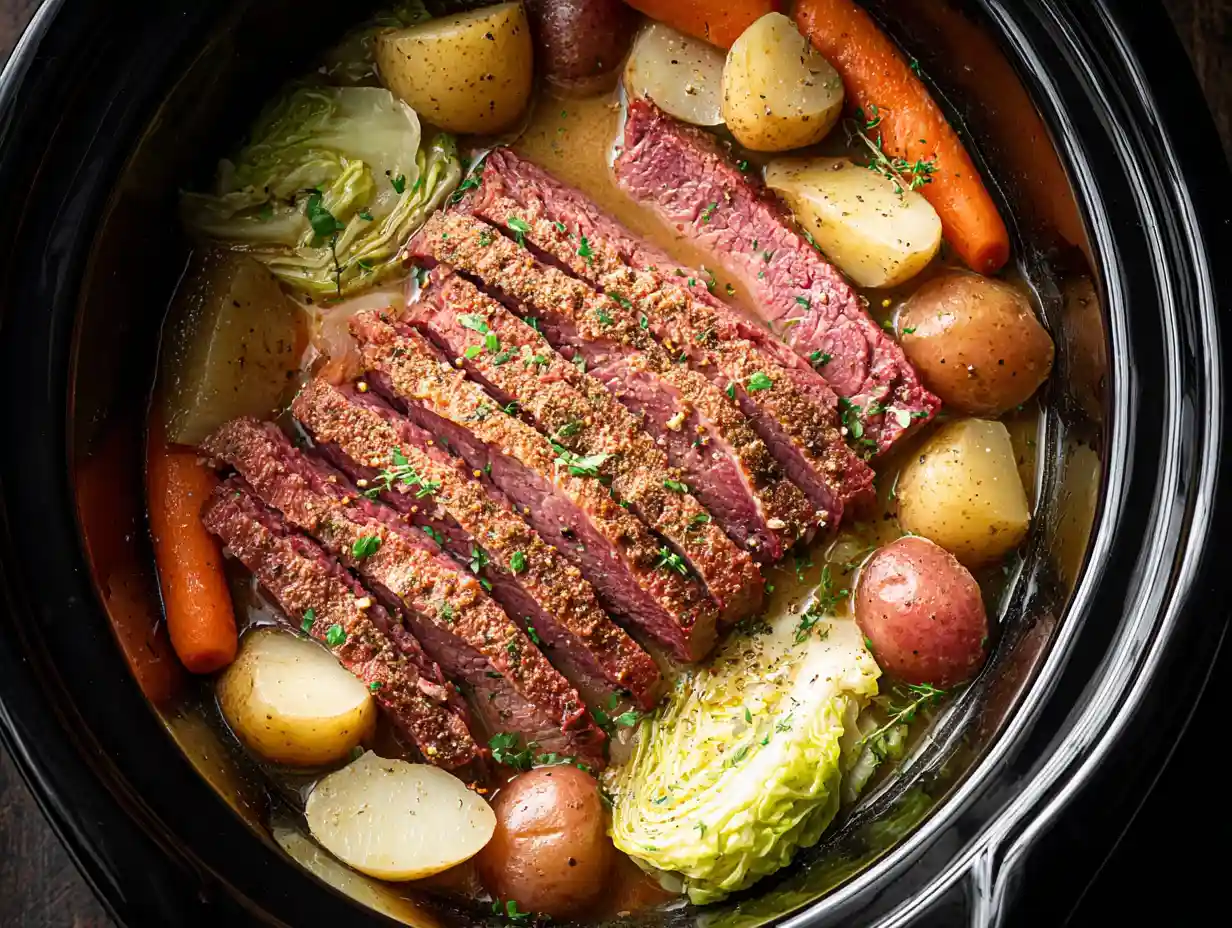
There’s something incredibly comforting about a home filled with the savory aroma of a slow-cooked meal. For me, the scent of tender corned beef and cabbage simmering away evokes memories of warmth and celebration, often marking the arrival of spring. I love dishes that feel special but don’t demand hours of hands-on attention, and this Slow Cooker Corned Beef and Cabbage recipe is a perfect example.
It’s a meal that practically makes itself, allowing you to go about your day while your slow cooker transforms simple ingredients into a fall-apart tender feast. Get ready to discover the easiest, most delicious way to enjoy this beloved classic, from start to finish.
Table of Contents
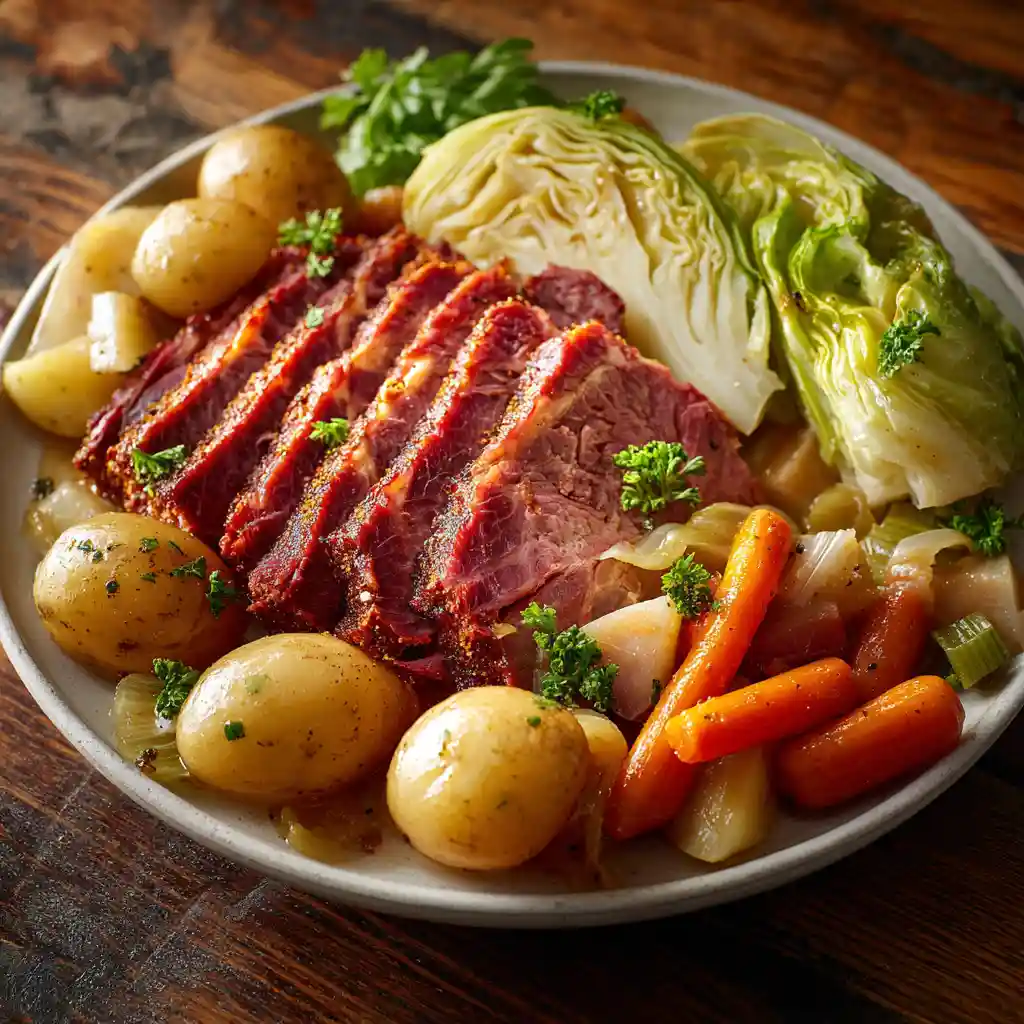

Easy Slow Cooker Corned Beef and Cabbage
Ingredients
Equipment
Method
- Place the potatoes, onions, carrots, celery, and garlic cloves in the bottom of a 6-quart slow cooker.
- Add the corned beef to the slow cooker on top of the vegetables with the fat side up. I also add any juices from the package to the slow cooker as well for extra flavor. Add the packet of pickling spices that came with the corned beef. If you like lots of flavor, add an additional 2 tablespoons of an all-purpose pickling spice.
- Add enough beef broth to just barely reach the top of the corned beef. I usually use about 3 cups but it will vary based on the size of your slow cooker and the size of your corned beef. Cover and cook on low for about 9 hours.
- About an hour before serving, add the cut cabbage into 1 inch wedges and add it to the broth around the brisket. Cover and cook for about an hour or until the cabbage has reached your desired tenderness.
- Once done cooking, remove the brisket from the slow cooker and remove the fat layer, if desired. Shred or slice the beef against the grain and serve with spicy mustard or a horseradish sauce along with the cabbage and other vegetables.
Nutrition
Notes
Cabbage is Mushy: This usually happens if the cabbage was added too early. For next time, remember to add it only in the last hour. If it’s already mushy, it’s still delicious; just embrace the softer texture!
Broth is Too Salty: If you find the broth (or the meat) too salty, you can try adding a bit more plain water or low-sodium beef broth to dilute it. A squeeze of lemon juice at the end can also help balance the flavors.
Tried this recipe?
Let us know how it was!Why You’ll Love This Slow Cooker Corned Beef and Cabbage Recipe
I truly believe this recipe will become a new favorite in your kitchen. Here’s why I think it’s the best Slow Cooker Corned Beef and Cabbage you’ll make:
- Effortless Perfection: My slow cooker does most of the work, letting the flavors meld beautifully with minimal fuss from me. It’s truly a set-it-and-forget-it kind of meal.
- Unbelievably Tender Beef: The low and slow cooking method guarantees corned beef that’s incredibly moist and fork-tender every single time. It just melts in your mouth!
- Perfectly Cooked Vegetables: I’ve timed the addition of the vegetables just right, so they cook until tender but still hold their shape and flavor, not mushy at all.
- Maximum Flavor Infusion: The long simmer allows the delicious pickling spices to penetrate the meat and vegetables, creating a rich, deeply satisfying taste.
A Taste of History: The True Story of Corned Beef and Cabbage
When I think of corned beef and cabbage, my mind immediately jumps to St. Patrick’s Day. But did you know its origins aren’t quite what you might expect for a traditional Irish dish? I find its history fascinating, a true tale of adaptation and culinary evolution.
In Ireland, the traditional meal for celebrations was boiled bacon and cabbage, as beef was often a luxury. When Irish immigrants arrived in America in the 19th century, pork was expensive. They found a more affordable alternative in kosher butchers: cured beef brisket, which was similar to their beloved salted pork. This “corned” beef, so named for the large “corns” or kernels of salt used in the curing process, became their substitute.
They paired it with inexpensive cabbage, creating the iconic Irish-American dish we know today. So, while it’s not an ancient Irish tradition, it’s a beautiful reflection of resourcefulness and culinary blending, a testament to how food can tell a story of immigration and new beginnings.
Ingredients for Perfectly Tender Slow Cooker Corned Beef and Cabbage
Putting together a delicious corned beef and cabbage starts with good ingredients. I’ve found that each component plays a vital role in creating that signature flavor and fall-apart texture. From the savory beef to the crisp cabbage and aromatic spices, every element matters.
Choosing Your Cut: Flat vs. Point Brisket
When you’re at the store, you’ll usually see two main cuts of corned beef brisket: flat-cut and point-cut. I want to explain the differences so you can pick the best one for your meal.
The flat-cut brisket, which I use for this recipe, is leaner and has a uniform, rectangular shape. It’s easier to slice neatly against the grain, making it ideal if you prefer beautiful, even slices for serving. The point-cut, on the other hand, is fattier and more irregular in shape. It’s often more flavorful due to the fat content and tends to shred more easily, making it perfect for pulled corned beef or hash. For a classic sliceable presentation, I always reach for the flat cut.
The Power of Pickling Spices
The pickling spice packet that comes with your corned beef is truly the secret weapon for its distinct flavor. I love how these little packets infuse so much character into the meat. Typically, you’ll find a blend of whole spices like black peppercorns, mustard seeds, coriander seeds, allspice berries, and often bay leaves or cloves.
These spices impart a warm, slightly peppery, and aromatic flavor that is essential to corned beef. While the included packet does a great job, I sometimes like to add an extra tablespoon or two of an all-purpose pickling spice if I’m craving an even more robust flavor profile. It truly makes a difference!
Your Essential Ingredients List
Here are the ingredients I use for this delicious slow cooker recipe:
- 1 (5 to 6 pound) flat cut corned beef (with pickling spices)
- 4 to 6 small potatoes
- 1 large onion (quartered)
- 1 1/2 cups baby carrots
- 2 ribs of celery (cut into 3-inch pieces)
- 3 cloves garlic
- 2 tablespoons pickling spice (optional)
- 2 to 4 cups beef broth
- 1 medium head cabbage (cut into 1 inch wedges)
Step-by-Step Instructions for Your Best Slow Cooker Corned Beef and Cabbage
Making this Slow Cooker Corned Beef and Cabbage is truly straightforward. Just follow these steps, and you’ll have a heartwarming meal ready with minimal effort.
- Place the potatoes, onions, carrots, celery, and garlic cloves in the bottom of a 6-quart slow cooker.
- Add the corned beef to the slow cooker on top of the vegetables with the fat side up. I also add any juices from the package to the slow cooker as well for extra flavor. Add the packet of pickling spices that came with the corned beef. If you like lots of flavor, add an additional 2 tablespoons of an all-purpose pickling spice.
- Add enough beef broth to just barely reach the top of the corned beef. I usually use about 3 cups but it will vary based on the size of your slow cooker and the size of your corned beef. Cover and cook on low for about 9 hours.
- About an hour before serving, add the cut cabbage into 1 inch wedges and add it to the broth around the brisket. Cover and cook for about an hour or until the cabbage has reached your desired tenderness.
- Once done cooking, remove the brisket from the slow cooker and remove the fat layer, if desired. Shred or slice the beef against the grain and serve with spicy mustard or a horseradish sauce along with the cabbage and other vegetables.
Expert Tips for Success
I’ve made my fair share of corned beef and cabbage over the years, and I’ve picked up a few tricks that really make a difference. I want to share my best advice to help you achieve the most delicious results with your Slow Cooker Corned Beef and Cabbage. These little details can elevate your dish from good to absolutely amazing!
Fat Side Up: Why it Matters
I always place my corned beef with the fat side facing up in the slow cooker. This isn’t just a random step; it’s a little secret for incredibly moist and flavorful meat. As the beef slowly cooks, the fat renders and bastes the meat below, keeping it tender and adding a wonderful depth of flavor to the broth and vegetables.
Rinsing the Beef: A Flavor Decision
Some recipes might tell you to rinse your corned beef before cooking, but I often skip this step. The brining process that gives corned beef its flavor also makes it quite salty. While rinsing can reduce some of that saltiness, I find that leaving it un-rinsed contributes to a richer, more flavorful cooking liquid and a more intensely seasoned piece of meat. If you are sensitive to salt, you can give it a quick rinse, but I prefer the robust flavor without it.
Vegetable Tenderness: Timing is Key
To ensure all my vegetables are perfectly cooked, not mushy, timing is everything. Heartier root vegetables like potatoes, carrots, onions, and celery can go in at the beginning with the beef because they need a long time to become tender. However, cabbage is much more delicate. I always add my cabbage wedges during the last hour of cooking. This way, they get tender and flavorful without turning into a soft, unappealing mess.
Achieving Your Desired Texture
The beauty of slow cooking is that you can influence the final texture of your corned beef. If you’re aiming for that classic fall-apart, shreddable texture that just melts in your mouth, cooking for the full 9 hours on low is perfect. Once done, let it rest for about 10-15 minutes before shredding with two forks. If you prefer a more sliceable texture, similar to a traditional brisket, you might consider a slightly shorter cooking time (around 8 hours) or cooking it on high for 4-5 hours. Always let it rest after removing it from the slow cooker before slicing against the grain.
Troubleshooting Common Issues
I know sometimes things don’t go exactly as planned in the kitchen, and that’s okay! Here are solutions to a few common corned beef and cabbage issues:
- Beef is Tough: If your corned beef is still tough after the recommended cooking time, it likely just needs more time. Slow cookers vary, so simply cover it and continue cooking on low for another hour or two until it reaches your desired tenderness.
- Cabbage is Mushy: This usually happens if the cabbage was added too early. For next time, remember to add it only in the last hour. If it’s already mushy, it’s still delicious; just embrace the softer texture!
- Broth is Too Salty: If you find the broth (or the meat) too salty, you can try adding a bit more plain water or low-sodium beef broth to dilute it. A squeeze of lemon juice at the end can also help balance the flavors.
Substitutions and Variations for Your Slow Cooker Corned Beef and Cabbage
I love how adaptable this recipe can be! While I adore the classic version, sometimes I enjoy switching things up. Here are some ideas for substitutions and variations that can add a fun twist to your Slow Cooker Corned Beef and Cabbage.
| Component | Substitution/Variation | Notes |
|---|---|---|
| Cooking Liquid | Hard Cider, Guinness Stout, Water | I use hard cider for a subtly sweet and tangy flavor. Guinness (or similar stout) adds a rich, malty depth. Water can be used if beef broth isn’t available, but may require more seasoning. |
| Vegetables | Parsnips, Small Turnips, Green Beans (added later) | I add parsnips or turnips for additional root vegetable flavor. Green beans can be added during the last 30 minutes of cooking for a lighter side. |
| Spice Packet | DIY Blend: 2 tbsp black peppercorns, 1 tbsp mustard seeds, 1 tsp coriander seeds, 1 tsp allspice berries, 1/2 tsp crushed bay leaves, 4-5 whole cloves, 1/2 cinnamon stick | If your corned beef doesn’t come with a packet, or you want to customize, I combine these spices in a cheesecloth sachet. Adjust quantities to taste for specific flavors. |
| For a Kick | Add a sliced jalapeño or a pinch of red pepper flakes with the other vegetables | For those who enjoy a bit of heat, I find these additions can provide a subtle spicy note without overpowering the traditional flavors. |
Serving Suggestions Beyond the Obvious
While corned beef and cabbage is a complete meal on its own, I love to think about how to make the meal even more special. Beyond just plating, here are some of my favorite ways to serve this dish and enhance the experience:
I always serve it with a variety of mustards; a tangy Dijon and a creamy horseradish sauce are my go-to’s. A side of warm, crusty bread is perfect for soaking up all the delicious broth. For a drink pairing, I find a dry Irish stout complements the richness of the beef beautifully, or for a non-alcoholic option, a sparkling cider is wonderfully refreshing. Sometimes, I even sprinkle a bit of fresh parsley over the top for a pop of color and freshness.
Storing and Enjoying Your Leftovers
I’m a big believer in enjoying every last bite, and leftovers from this Slow Cooker Corned Beef and Cabbage are truly a treasure! I make sure to store them properly so they stay delicious for days.
Once the dish has cooled completely, I transfer the leftover corned beef, cabbage, and vegetables to airtight containers. It will keep beautifully in the refrigerator for up to 3-4 days. If you want to store it longer, I recommend freezing the beef and vegetables separately in freezer-safe bags or containers for up to 2-3 months. Just thaw overnight in the fridge before reheating.
Creative Leftover Recipes
I love transforming leftovers into new, exciting meals! Here are a few creative ideas for your leftover corned beef and cabbage that go beyond just a simple reheat:
- Corned Beef Quesadillas: I shred the leftover corned beef, sauté it briefly with some diced onions, and then layer it with Monterey Jack cheese inside tortillas. Cook until golden and crispy!
- Shepherd’s Pie Twist: Instead of traditional ground beef, I use shredded corned beef as the base for a shepherd’s pie. Top it with mashed potatoes and bake until bubbly and golden.
- Savory Hand Pies: I love to chop the corned beef and cabbage finely, mix it with a little gravy or some of the leftover broth, and then enclose it in puff pastry or pie dough for individual savory hand pies. They’re perfect for lunch!
- Quick Corned Beef Soup: I combine any leftover broth with additional beef broth, chopped corned beef, and vegetables. Simmer until heated through, and add a handful of noodles or rice for a hearty soup.
FAQs about Slow Cooker Corned Beef and Cabbage
I often get questions about making corned beef, so I’ve gathered some of the most common ones here to help you out!
Do I need to let the corned beef brisket rest before slicing it?
Yes, I always recommend letting the corned beef rest for about 10-15 minutes after removing it from the slow cooker. This allows the juices to redistribute, resulting in a more tender and flavorful slice.
Is flat-cut or point-cut corned beef better for slow cooking?
Both cuts work well in a slow cooker. I prefer flat-cut for easier, neat slicing, while point-cut is fattier and shreds more easily, which is great for dishes like hash.
Is corned beef made with corn?
No, corned beef is not made with corn. The “corned” refers to the large “corns” or kernels of salt used in the curing or brining process, not the vegetable.
How do you know when corned beef is done in a slow cooker?
Corned beef is done when it’s fork-tender. I can easily insert a fork into the meat and twist it with little resistance, or if I lift a piece, it should begin to fall apart.
How long does leftover cooked corned beef last in the fridge?
I safely store cooked corned beef and vegetables in an airtight container in the refrigerator for 3-4 days.
Can you freeze leftover corned beef?
Absolutely! I freeze leftover cooked corned beef in airtight, freezer-safe containers or bags for up to 2-3 months. I recommend freezing the meat separate from the cabbage if possible.
Can I cook corned beef on high in the slow cooker?
Yes, you can cook corned beef on high, but I find low and slow (about 9 hours) yields the most tender and flavorful results. On high, it typically takes about 4-6 hours, but keep an eye on it to ensure it doesn’t dry out.
Printable Recipe Card
Want just the essential recipe details without scrolling through the article? Get our printable recipe card with just the ingredients and instructions.