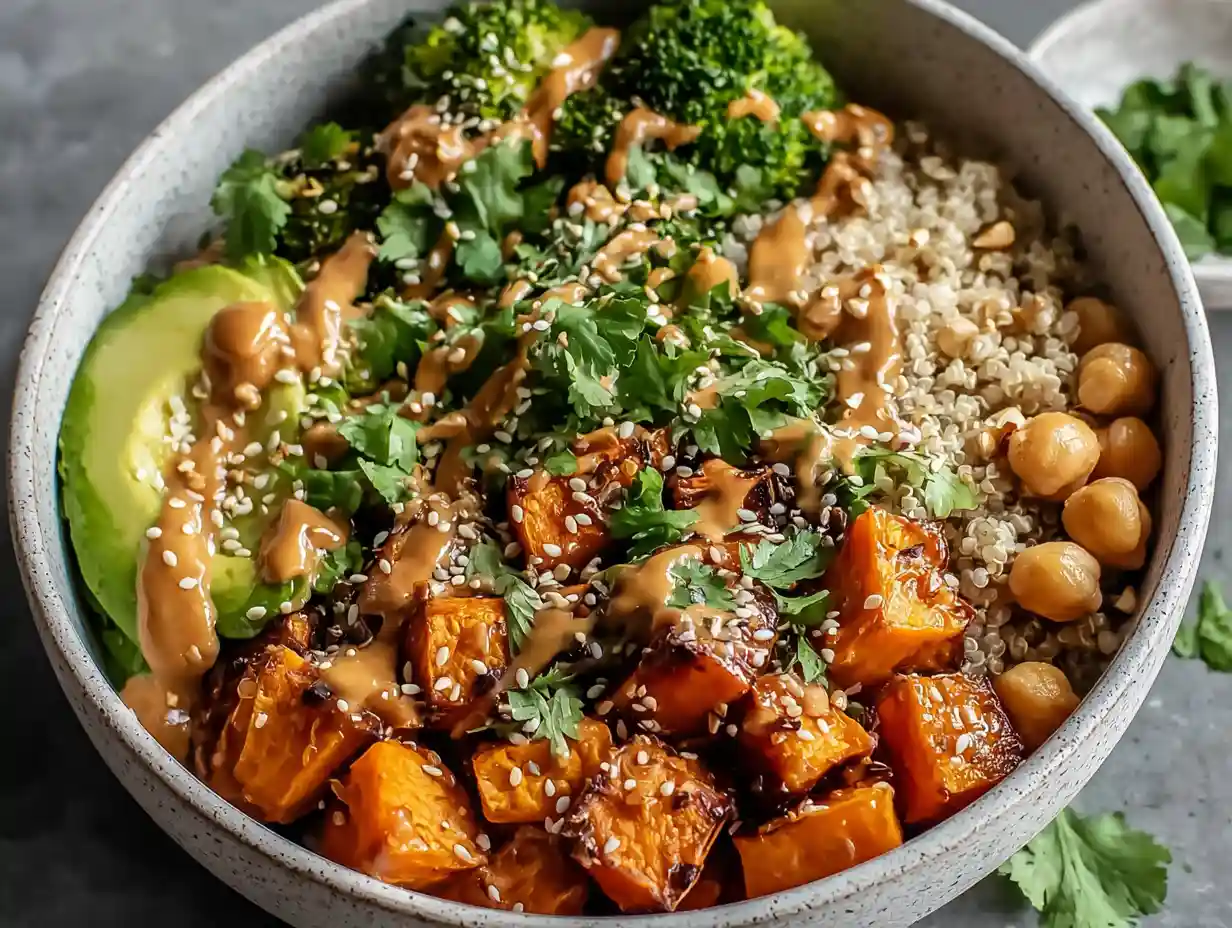
Hi there, food lovers! I’m Emily, and I’m so thrilled you’re joining me today in my cozy kitchen corner. If you’re anything like me, you adore dishes that are bursting with flavor, incredibly satisfying, and genuinely good for you. That’s why I’m absolutely delighted to share my recipe for this incredible Thai Peanut Sweet Potato Buddha Bowl.
This bowl is a true explosion of tastes and textures, featuring perfectly roasted sweet potatoes and chickpeas, vibrant steamed veggies, and that irresistible creamy peanut sauce that just ties everything together. It’s a nourishing meal that feels like a warm hug, and I promise it’s much simpler to make than it looks. You can have this delicious Thai Peanut Sweet Potato Buddha Bowl ready to enjoy in approximately 45 minutes total.
Table of Contents

The Ultimate Thai Peanut Sweet Potato Buddha Bowl
Ingredients
Equipment
Method
- Preheat the oven to 400 degrees Fahrenheit.
- Add the cubed sweet potato and rinsed chickpeas in a bowl and toss with all spices/seasonings until well combined.
- Add to a baking sheet lined with parchment paper and bake for 30-35 minutes or until the sweet potato can be easily pierced with a fork.
- Cook your grain according to package instructions. Follow these steps for quinoa, and check your rice package for instructions because they vary depending on the type of rice. Cook the grain in veggie broth for a little extra flavor!
- Meanwhile, add the edamame and broccoli to a pot with 1 inch of water and steam for 5-7 minutes or until the broccoli is just barely fork tender. Drain off the excess water.
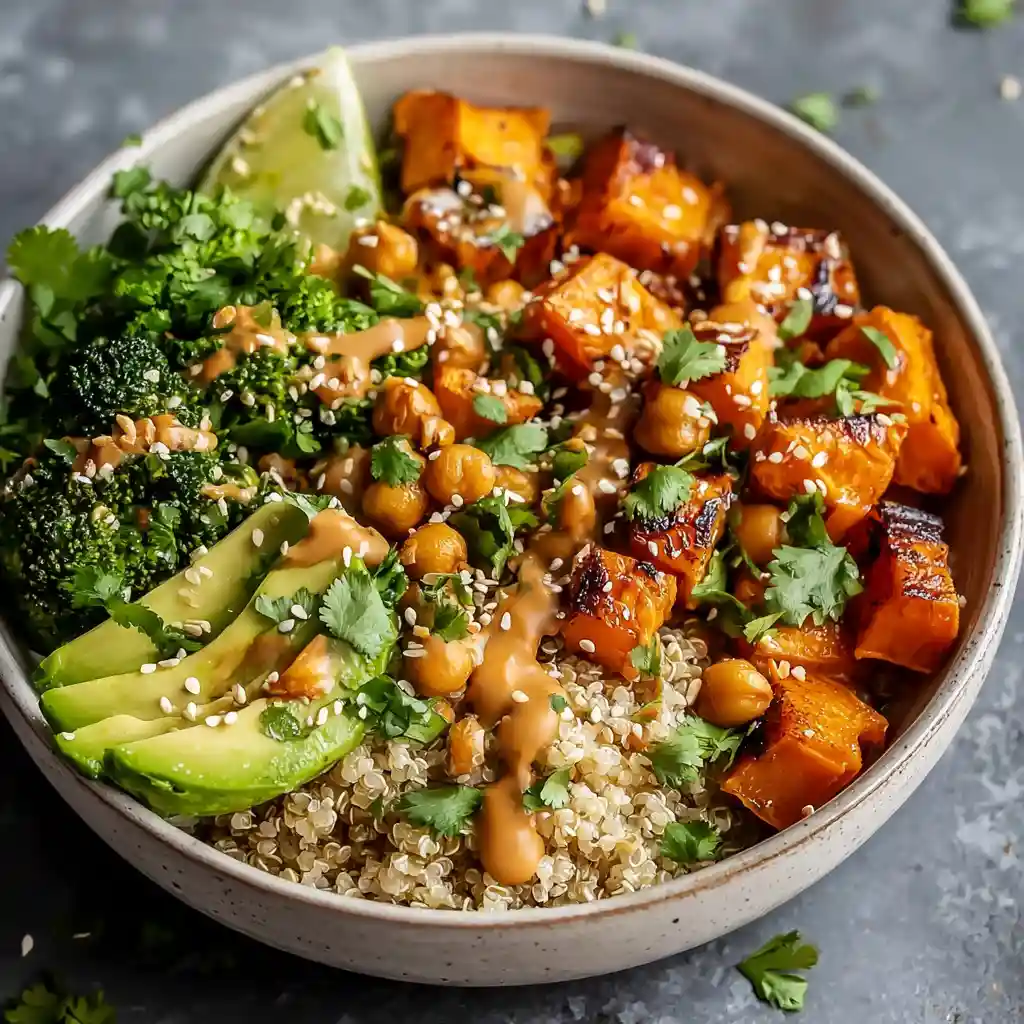
- When the potatoes/chickpeas are done, assemble the bowls with a base of your grain of choice, then add the steamed veggies, sweet potato/chickpeas, avocado and top with a generous serving of peanut sauce, chopped cilantro and crushed peanuts. I like some red pepper flakes for extra spice too!
Nutrition
Notes
Tried this recipe?
Let us know how it was!What is a Buddha Bowl? (My Specialty!)
You might have heard the term “Buddha Bowl” floating around, and I think it perfectly encapsulates what I aim for in my cooking here at Delish Map. At its heart, a Buddha bowl is a beautiful, balanced meal served in a single bowl, typically featuring a grain, a protein, a variety of vegetables, and a delicious dressing. It’s all about creating a harmonious plate that nourishes your body and soul.
The name itself is said to come from the idea that the ingredients are piled high, much like the round belly of Buddha. I love that imagery! For me, it represents a complete, wholesome meal that’s both visually appealing and deeply satisfying. It’s a wonderful way to enjoy a wide array of flavors and textures in one delightful serving.
Why You’ll Love This Thai Peanut Sweet Potato Buddha Bowl
I’ve made countless Buddha bowls, but this Thai Peanut Sweet Potato Buddha Bowl holds a special place in my heart, and I know you’ll fall in love with it too! I crafted this recipe to be not just healthy, but genuinely exciting to eat. Here’s why I think it’s the best:
- Flavor-Packed Goodness: The combination of sweet, spicy, and savory notes from the roasted sweet potatoes, sriracha, maple syrup, and that incredible peanut sauce creates an unforgettable taste experience. Every bite is an adventure for your taste buds.
- Incredibly Satisfying: With a hearty base of your favorite grain, plenty of roasted and steamed vegetables, and protein-rich chickpeas and edamame, this bowl will keep you feeling full and energized for hours. It’s truly a complete meal.
- Packed with Nutrients: This recipe is a powerhouse of vitamins, minerals, and fiber. From the vibrant sweet potatoes to the green goodness of broccoli and edamame, you’re fueling your body with wholesome ingredients.
- Easy to Customize: I adore recipes that allow for flexibility, and this is one of them! You can easily swap out vegetables, grains, or proteins based on what you have on hand or what your family prefers. It’s truly a versatile dish.
The Ultimate Thai Peanut Sauce: Tips & Tricks
My homemade Thai Peanut Sauce is truly the star of this bowl, bringing all those wonderful flavors together. The ingredients list for this bowl mentions a separate recipe for the peanut sauce, which I highly recommend checking out to achieve the perfect balance of sweet, savory, and spicy. However, I have a few extra tips for you that will ensure your sauce is always amazing!
When I’m making my peanut sauce, I aim for a consistency that’s pourable but still thick enough to cling to the ingredients. If your sauce ends up too thick, a splash of water or a little extra lime juice can help thin it out. Conversely, if it’s a bit too thin, I’ve found that a tiny bit more peanut butter or even a sprinkle of cornstarch mixed with a tablespoon of water can thicken it up nicely.
Don’t be afraid to taste and adjust the spice level with more sriracha or red pepper flakes, or add a touch more maple syrup if you prefer it sweeter.
Achieving Perfect Textures: Crispy Sweet Potatoes & Fluffy Grains
I believe that texture is just as important as flavor, especially in a bowl like this! Achieving perfectly crispy sweet potatoes and fluffy grains is key to a truly satisfying Buddha Bowl. For the sweet potatoes and chickpeas, ensure they are spread in a single layer on your baking sheet; overcrowding will steam them instead of crisping them up. I also make sure my oven is fully preheated to 400 degrees Fahrenheit, and I don’t shy away from giving them a good toss halfway through baking to encourage even browning and crispiness.
When it comes to your chosen grain, whether it’s quinoa, rice, or millet, stick closely to the package instructions. A common mistake is using too much water, which can lead to mushy grains. I also find that cooking grains in vegetable broth instead of just water adds a wonderful depth of flavor, making your base even more delicious. Once cooked, let the grain sit covered for a few minutes off the heat before fluffing it with a fork; this helps release any excess steam and results in individual, perfectly fluffy grains.
Ingredients
Here’s what I gather when I’m making this amazing Thai Peanut Sweet Potato Buddha Bowl:
- 4 cups peeled and cubed sweet potato (about 2 medium potatoes)
- 1 can chickpeas (drained and rinsed)
- 2 tablespoons oil (I used avocado)
- 1 tablespoon soy sauce or tamari
- 1 tablespoon maple syrup
- 1-2 tablespoon sriracha (depending on spice preference)
- 2 teaspoon minced garlic
- 1/2 teaspoon red pepper flakes
- 1 cup uncooked grain of choice (I suggest quinoa, rice or millet!)
- 1 head broccoli (chopped)
- 1 1/2 cup shelled edamame
- 1 avocado
- 1/2 batch peanut sauce\* (click for recipe)
- 1/2 cup chopped peanuts
- 1/2 cup chopped cilantro
How to Make the Thai Peanut Sweet Potato Buddha Bowl: Step-by-Step
Making this bowl is a joy, and I promise you’ll find these steps straightforward and rewarding!
- Preheat the oven to 400 degrees Fahrenheit.
- Add the cubed sweet potato and rinsed chickpeas in a bowl and toss with all spices/seasonings until well combined.
- Add to a baking sheet lined with parchment paper and bake for 30-35 minutes or until the sweet potato can be easily pierced with a fork.
- Cook your grain according to package instructions. Follow these steps for quinoa, and check your rice package for instructions because they vary depending on the type of rice. Cook the grain in veggie broth for a little extra flavor!
- Meanwhile, add the edamame and broccoli to a pot with 1 inch of water and steam for 5-7 minutes or until the broccoli is just barely fork tender. Drain off the excess water.
- When the potatoes/chickpeas are done, assemble the bowls with a base of your grain of choice, then add the steamed veggies, sweet potato/chickpeas, avocado and top with a generous serving of peanut sauce, chopped cilantro and crushed peanuts. I like some red pepper flakes for extra spice too!
Creative Toppings & Garnishes
I think the magic of a Buddha bowl often lies in the toppings! While the recipe includes chopped peanuts and cilantro, I love to get creative with additional garnishes to elevate the experience. For an extra burst of freshness, I sometimes add a squeeze of fresh lime juice right before serving. A sprinkle of black or white sesame seeds adds a lovely visual contrast and a subtle nutty flavor.
For a crunch factor, crispy fried shallots or even a handful of toasted coconut flakes can be absolutely delicious, especially with the Thai flavors. If I’m feeling extra fancy, I might whip up a quick red onion pickle or a simple cucumber salsa with a hint of rice vinegar and chili for a vibrant, tangy contrast. Don’t be afraid to experiment with a drizzle of sriracha for those who like extra heat!
Nutritional Breakdown & Health Benefits
I truly believe food is medicine, and this Thai Peanut Sweet Potato Buddha Bowl is a testament to that! Each component brings its own set of incredible health benefits. Sweet potatoes are a fantastic source of beta-carotene, which converts to Vitamin A, crucial for vision and immune function, and they’re also rich in fiber and Vitamin C. Chickpeas are powerhouse legumes, providing plant-based protein and dietary fiber, which aids digestion and helps stabilize blood sugar. The recipe stats mention around 450 calories per serving, making it a well-balanced meal option.
The grains I suggest, like quinoa, rice, or millet, offer complex carbohydrates for sustained energy. Quinoa, in particular, is a complete protein, meaning it contains all nine essential amino acids. Broccoli and edamame pack a punch with vitamins K and C, folate, and antioxidants, supporting bone health and fighting inflammation. Even the avocado contributes healthy monounsaturated fats, promoting heart health and nutrient absorption. This bowl truly fuels your body from the inside out!
Meal Prep & Storage Made Easy
One of the reasons I adore this Thai Peanut Sweet Potato Buddha Bowl is how wonderfully it adapts to meal prepping! I often prepare individual components ahead of time to make weeknight assembly a breeze.
I recommend roasting the sweet potatoes and chickpeas and cooking your chosen grain on your prep day. Store them separately in airtight containers in the fridge. The roasted sweet potatoes and chickpeas will stay fresh for up to 4-5 days, and cooked grains are good for about 3-4 days. You can also steam the broccoli and edamame, allowing them to cool completely before storing them in their own container for 2-3 days.
The peanut sauce can be made in advance and kept in a sealed jar in the fridge for up to a week; it might thicken slightly, so a little water to thin it out before serving is perfect. When I’m ready to eat, I gently reheat the grain, sweet potatoes, chickpeas, and steamed veggies in the microwave or a pan, then add fresh avocado, cilantro, and peanuts.
Variations & Customization Ideas
I love how versatile this Thai Peanut Sweet Potato Buddha Bowl recipe is! It’s so easy to swap ingredients based on your preferences or what you have in your pantry. Here are some of my favorite ways to customize it:
| Component | Original Ingredient | Variation/Swap Ideas |
|---|---|---|
| Grains | Quinoa, Rice, Millet | Farro, Brown Rice, Wild Rice, Couscous, Cauliflower Rice (for low-carb) |
| Vegetables | Broccoli, Edamame, Avocado | Bell Peppers (any color, roasted or raw), Spinach, Kale, Shredded Carrots, Cucumber, Red Cabbage, Mushrooms |
| Protein | Chickpeas, Edamame | Baked Tofu (cubed, pan-fried), Tempeh, Black Beans, Lentils, Shredded Chicken (for non-plant-based), Fried Egg |
| Sweetener | Maple Syrup | Agave Nectar, Honey (for non-vegan) |
| Spice Level | Sriracha, Red Pepper Flakes | Gochujang, Chili Garlic Sauce, Fresh Jalapeño slices |
| Nut-Free | Peanut Sauce, Peanuts | Tahini-based sauce, Sunflower Seed Butter sauce, Toasted Pepitas or Sunflower Seeds |
Ingredient Selection & Quality Tips
For me, starting with good quality ingredients truly makes a difference in the final taste of any dish, and this Thai Peanut Sweet Potato Buddha Bowl is no exception. When I’m at the grocery store, I always look for sweet potatoes that are firm to the touch and free of soft spots or sprouts. I find the longer, thinner ones are often sweeter! For fresh produce like broccoli, I look for vibrant green florets with firm stems.
Regarding pantry staples, I usually opt for organic chickpeas if possible, and I always rinse them thoroughly to remove excess sodium. For the oil, I love using avocado oil because of its neutral flavor and high smoke point, but any neutral cooking oil works well. If you’re buying a pre-made peanut butter for your sauce, I suggest one with minimal added sugar and no hydrogenated oils to keep things on the healthier side. This recipe is designed to be a high-protein, fiber-rich meal.
Serving & Presentation Tips
I always say we eat with our eyes first, and a beautifully presented Buddha bowl is just so much more inviting! Once all your components are ready, I like to create distinct sections in the bowl rather than just mixing everything together. I start with the cooked grain as a base, then arrange the vibrant sweet potatoes, the green edamame and broccoli, and the creamy avocado in separate little “piles” around the edge.
Finally, I drizzle that luscious peanut sauce generously over everything, letting it seep down and coat all the delicious ingredients. A sprinkle of fresh chopped cilantro and crushed peanuts as a garnish truly adds that finishing touch, both visually and texturally. It makes the meal feel special, even on a busy weeknight!
FAQs about Thai Peanut Sweet Potato Buddha Bowl
I get a lot of questions about customizing my recipes, and I love helping you make them your own! Here are a few common ones I receive about Buddha bowls:
Q: Can I make this Thai Peanut Sweet Potato Buddha Bowl peanut-free?
A: Absolutely! You can easily adapt the sauce by replacing the peanut butter with tahini or sunflower seed butter. Just be sure to check that the product you choose is certified nut-free if allergies are a concern. For toppings, you can use toasted sunflower or pumpkin seeds instead of peanuts.
Q: What kind of grain is best for a Buddha bowl?
A: That’s a great question, and the answer is truly personal preference! I suggest quinoa for its complete protein profile, or fluffy white or brown rice. Millet is another fantastic gluten-free option. You could even use a mix of grains for added texture and nutrients.
Q: Can I add other vegetables to this bowl?
A: Please do! This recipe is incredibly flexible. Bell peppers (roasted or raw), shredded carrots, spinach or kale (sautéed briefly), or even roasted Brussels sprouts would be delicious additions. I always encourage using what you have on hand and what you love!
Conclusion & Call to Action
I truly hope you’re feeling inspired to bring this delightful Thai Peanut Sweet Potato Buddha Bowl into your kitchen. It’s a recipe I adore, not just for its incredible flavors and nourishing ingredients, but for how it brings joy and comfort to my table. It’s a perfect example of how wholesome food can be exciting, satisfying, and easy to prepare.
I can’t wait for you to try this recipe! Please, if you do, come back and tell me all about it in the comments below. What variations did you try? Did you discover a new favorite ingredient? And if you have any questions at all, don’t hesitate to ask. Happy cooking, friends!
For more recipes, follow us on Pinterest.
Printable Recipe Card
Want just the essential recipe details without scrolling through the article? Get our printable recipe card with just the ingredients and instructions.