Thanksgiving has always been my favorite holiday, filled with family, laughter, and, of course, incredible food. But for me, the star of the show is always the stuffing! I remember one year when I accidentally dropped the entire bowl of pre-made stuffing on the kitchen floor, moments before our guests arrived. Disaster averted; we ordered pizza and made stuffing the next day!
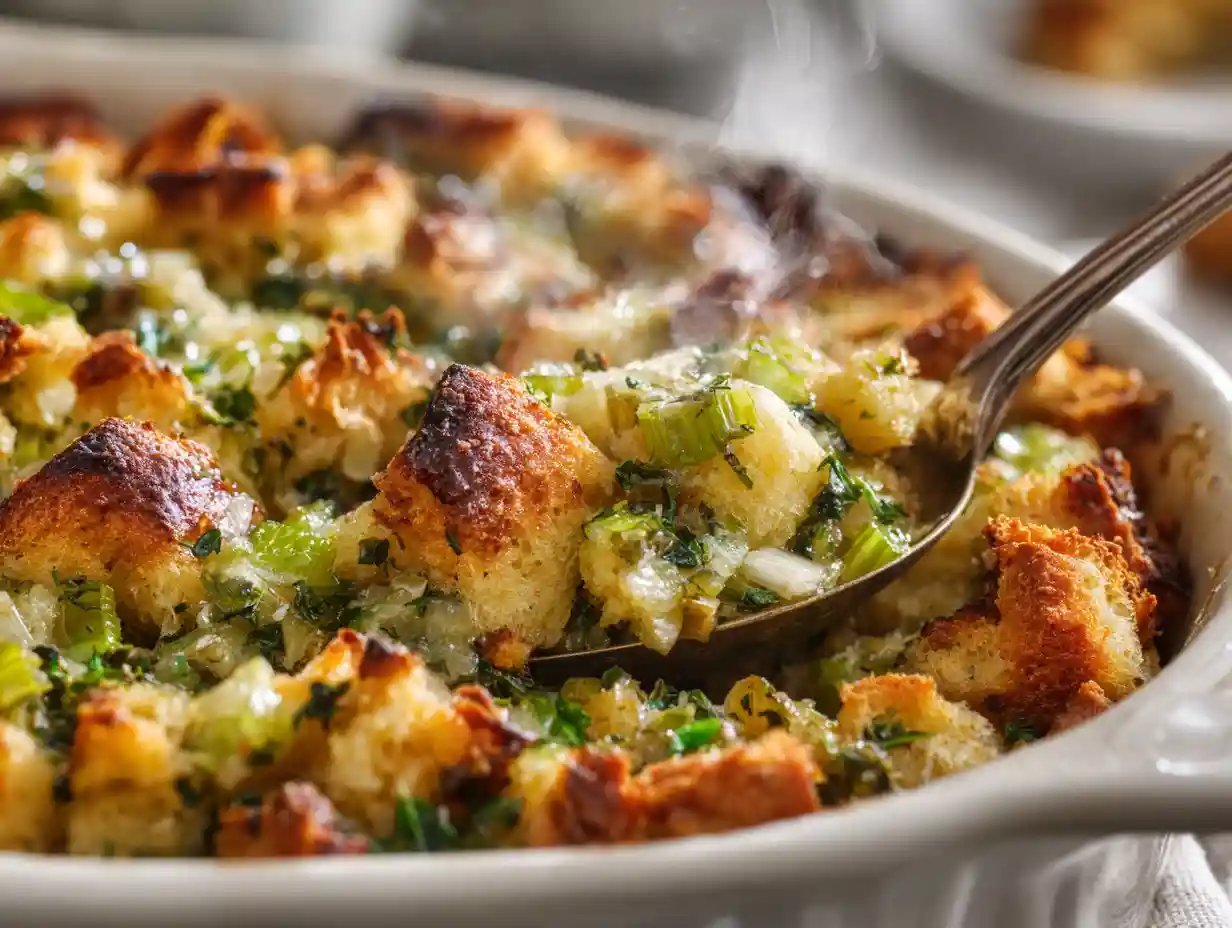
After many years, I’ve perfected my Thanksgiving Stuffing Recipe, which I believe is truly the best. With a prep and cook time of approximately one hour, it’s simple to make, incredibly flavorful, and sure to be a hit at your Thanksgiving feast.
Table of Contents
Why This Thanksgiving Stuffing Recipe Works
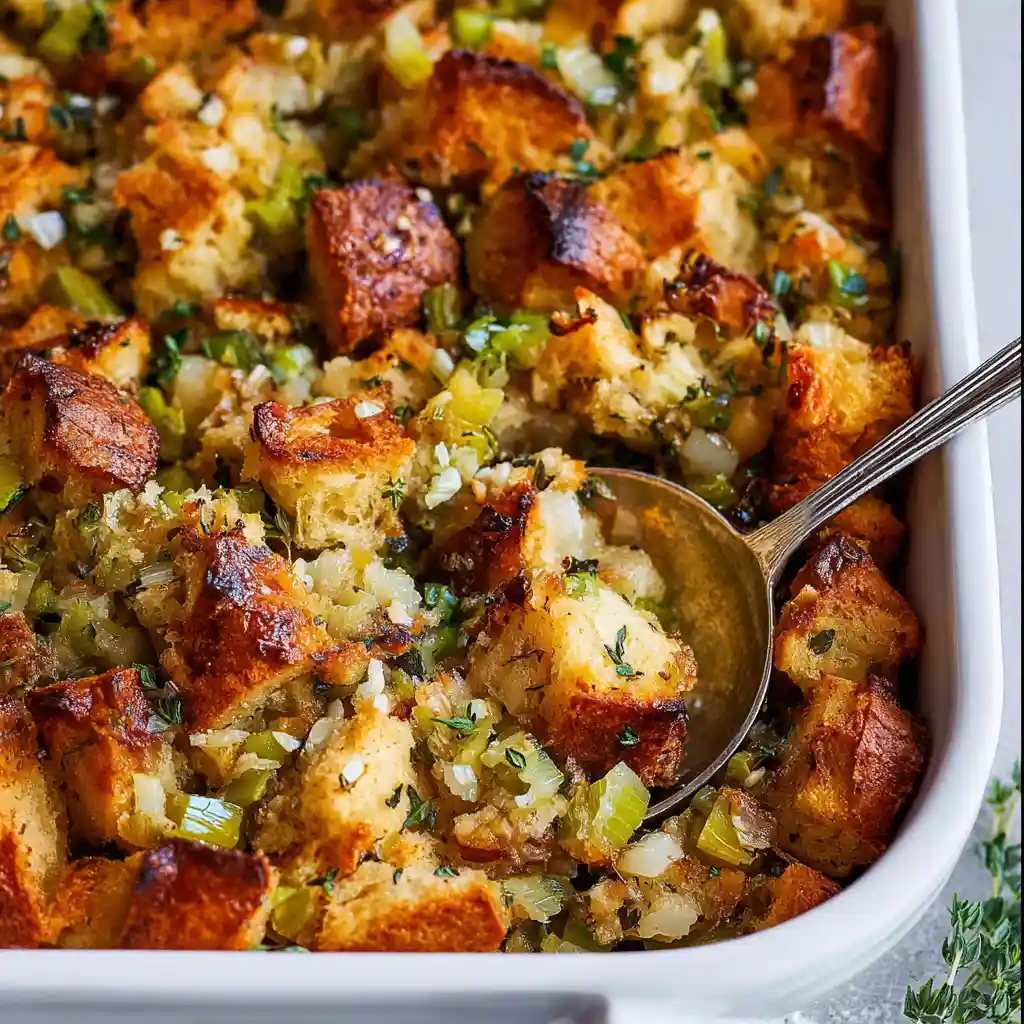
I truly believe that the key to amazing stuffing lies in the details. Using a mix of stale and fresh bread creates the perfect texture; some parts are soft, while others have a delightful, crispy edge. Sautéing the onions, celery, and garlic before adding them to the bread base unlocks a depth of flavor you just can’t achieve otherwise. And the fresh herbs? They add a burst of aromatic goodness that elevates the entire dish.
The moisture from the stock, combined with the eggs, binds everything together beautifully, ensuring your stuffing is perfectly moist, never dry. Speaking of breakfast and brunch recipes, if you’re looking for another tasty morning dish, you should try this recipe for Easy Apple Cinnamon Pancakes: The Ultimate Breakfast.
Ingredients
Here’s what you’ll need to make my incredible Thanksgiving stuffing:
- 18 to 24 ounces bread cubes, (1.5 loaves of bread, or about 12 to 14 cups) (preferably toasted or stale)
- 1 cup unsalted butter
- 3 cups diced sweet onion, (roughly 2 large onions)
- 2 cups diced celery
- 6 garlic cloves, (minced)
- kosher salt and pepper
- 3 tablespoons chopped fresh sage
- 3 tablespoons chopped fresh parsley
- 3 tablespoons chopped fresh rosemary
- 2 1/2 cups chicken or vegetable stock
- 2 large eggs
- a mixture of fresh herbs for sprinkling
I recommend using a mix of bread types, like sourdough and Italian, for a more interesting texture. Fresh herbs are crucial for the best flavor, but in a pinch, you can use dried. Feel free to use chicken or vegetable stock, depending on your dietary preferences.
You can serve it with a side dish, like The Ultimate Gordon Ramsay Meatloaf Recipe: Quick & Easy.
Ingredient Substitutions and Variations
Here are some potential substitutions you can make based on your dietary needs or what you have on hand:
| Ingredient | Substitution | Notes |
|---|---|---|
| Bread | Gluten-free bread | Ensure it’s a sturdy gluten-free bread that can hold its shape. |
| Fresh Herbs | Dried Herbs | Use about 1 tablespoon of each dried herb, instead of 3 tablespoons fresh. |
| Chicken Stock | Vegetable Stock | For a vegetarian option. |
| Unsalted Butter | Dairy-free butter alternative or olive oil | If using olive oil, use a good quality extra virgin olive oil. |
| Sweet Onion | Yellow Onion | The taste will be very similar. |
For a low-sodium version, use low-sodium stock and reduce the amount of added salt. For a dairy-free version, simply substitute the butter with a dairy-free alternative.
Recommended Equipment
To make my Thanksgiving stuffing, you’ll need the following equipment:
- Large skillet or Dutch oven
- 9×13 inch baking dish (or larger foil roasting pan)
- Large mixing bowl
- Small bowl or measuring cup
- Whisk
If you don’t have a 9×13 inch baking dish, you can use two smaller baking dishes. A large skillet or dutch oven is essential for sautéing the vegetables.
Step-by-Step Instructions
Here’s how to make my Thanksgiving stuffing, step by step:
- Bread Prep: Remember, you have bread options! Stale or toasty bread works best. You can cut 1 ½ pounds of bread into cubes, place it in a large baking dish, loosely tent with foil, and let it sit overnight. You can also cut the cubes and put them in oven, toasting them at 350 degrees F until they are like croutons, about 15 minutes or so. Finally, you can buy the toasted bread cubes in bags from the store. It’s your choice! You can also choose the size of your cubes. They can be small or larger for a more rustic stuffing. My mom has always used a mixture of stale and fresh bread. Also, I like to use different kinds of bread (usually two), like a sourdough and italian, and mix the cubes. It provides great texture.
- Preheat & Prep: Preheat the oven to 350 degrees F. Brush a 9×13 baking dish (you can also use a larger baking dish or a larger foil roasting pan too!) with melted butter, olive oil or spray with nonstick spray. Place the bread in a large mixing bowl (this may be easier for you to stir!) or the baking dish that you will bake it in. You can also separate this into two baking dishes if it’s easier.
- Sauté Vegetables: Heat the butter in a large skillet or dutch oven over medium heat. Once melted, stir in the onion, celery and garlic with a big pinch of salt and pepper – at least ½ to 1 teaspoon each. Cook until the onions and celery soften, about 8 to 10 minutes. Stir in the sage, parsley and rosemary. Cook for another minute. Stir in 1 cup of stock.
- Combine: Pour the onion celery mixture over the bread crumbs and toss well to coat.
- Add Liquid: In a small bowl or measuring cup, whisk together the remaining 1 ½ cups stock and 2 eggs.
- Mix & Bake: Pour that mixture into the bread cubes and stir and fold the bread cubes until thoroughly combined. Bake the stuffing for 45 to 50 minutes, until the internal temperature registers 160 degrees F. If the stuffing is getting too browned, you can tent it with foil.
- Make Ahead/Stuffing Bird Options: I have successfully made this a day ahead of time and reheated it – it’s just as good! Remove the pan from the fridge 60 minutes before reheating it. You can also use this mixture to stuff the bird if you wish!
Note: I will be updating this post soon with high-quality photos or a video showing each step.
How to Keep Stuffing Warm
If dinner is delayed or you’re serving buffet style, here are a few tips to keep your stuffing warm:
- Slow Cooker: Transfer the baked stuffing to a slow cooker on the warm setting.
- Warming Drawer: If you have a warming drawer, use it to keep the stuffing at a consistent temperature.
- Chafing Dish: A chafing dish is a great option for keeping stuffing warm at a buffet.
Stuffing vs. Dressing: What’s the Difference?
The terms “stuffing” and “dressing” are often used interchangeably, but technically, stuffing is cooked inside the bird, while dressing is cooked separately in a baking dish. My recipe works perfectly as either! In case you have any dietary restrictions, you can also create How to Create a Charcuterie Board on a Budget!
Make-Ahead Instructions
You can absolutely prepare this Thanksgiving Stuffing Recipe in advance! Simply mix all the ingredients together, cover the baking dish tightly with plastic wrap, and refrigerate for up to 24 hours. When you’re ready to bake, remove the pan from the fridge 60 minutes before baking, and bake as directed.
How to Store and Reheat Leftover Thanksgiving Stuffing Recipe
Store leftover stuffing in an airtight container in the refrigerator for up to 3-4 days. For longer storage, you can freeze it for up to 2-3 months.
To reheat, thaw the stuffing in the refrigerator overnight and bake in a preheated oven at 350 degrees F until heated through. You can also reheat it in the microwave, but the texture may not be as good.
Thanksgiving Stuffing Recipe Variations
Here are a few variations you can try:
- Vegetarian: Use vegetable stock and add sautéed mushrooms and other vegetables.
- Gluten-Free: Use gluten-free bread.
- Cornbread: Substitute half of the bread cubes with cornbread cubes.
- Sausage: Add cooked and crumbled sausage to the mixture.
Serving Suggestions
While stuffing is a Thanksgiving staple, it also pairs well with other dishes! Try serving it with:
- Roasted chicken or turkey
- Mashed potatoes
- Cranberry sauce
- Green bean casserole
Troubleshooting: Common Stuffing Problems and Solutions
- Too Dry: Add more stock to the stuffing before baking.
- Too Soggy: Make sure you’re using stale or toasted bread. You can also bake the stuffing uncovered for the last 15 minutes to help it dry out.
- Not Browning: Brush the top of the stuffing with melted butter before baking and bake uncovered.
Nutritional Information and Health Benefits of Thanksgiving Stuffing Recipe
Here’s some nutritional information per serving (estimated):
- Calories: 350
- Fat: 20g
- Saturated Fat: 12g
- Cholesterol: 75mg
- Sodium: 500mg
- Carbohydrates: 35g
- Fiber: 3g
- Sugar: 5g
- Protein: 8g
Stuffing can be a good source of fiber, vitamins, and minerals, especially when made with whole-grain bread and plenty of vegetables. According to the University of Illinois Extension, a serving of savory bread stuffing contains 70 calories and 4g of fat.
FAQs about stuffing recipe
Here are some frequently asked questions about making stuffing:
Is it safe to stuff a turkey?
Yes, as long as you ensure the stuffing reaches a safe internal temperature of 165 degrees F.
Can you make stuffing in a slow cooker?
Yes, you can cook stuffing in a slow cooker on low for 4-6 hours.
What’s the best way to prevent soggy stuffing?
Use stale or toasted bread and don’t add too much liquid.
Can I use different types of bread?
Absolutely! I recommend using a mix of bread types for the best texture and flavor.
Conclusion
My Thanksgiving Stuffing Recipe is a guaranteed crowd-pleaser, simple to make, and bursting with flavor. It’s the perfect addition to your Thanksgiving feast or any cozy meal. Now it’s your turn! I’d love to hear how this recipe turns out for you.
Leave a comment below with any questions or share your results! I can’t wait to hear from you.
For more recipes, follow us on Pinterest.

Best Thanksgiving Stuffing Recipe for a Flavorful Feast
Ingredients
Equipment
Method
- Bread Prep: Remember, you have bread options! Stale or toasty bread works best. You can cut 1 ½ pounds of bread into cubes, place it in a large baking dish, loosely tent with foil, and let it sit overnight. You can also cut the cubes and put them in oven, toasting them at 350 degrees F until they are like croutons, about 15 minutes or so. Finally, you can buy the toasted bread cubes in bags from the store. It’s your choice! You can also choose the size of your cubes. They can be small or larger for a more rustic stuffing. My mom has always used a mixture of stale and fresh bread. Also, I like to use different kinds of bread (usually two), like a sourdough and italian, and mix the cubes. It provides great texture.
- Preheat & Prep: Preheat the oven to 350 degrees F. Brush a 9×13 baking dish (you can also use a larger baking dish or a larger foil roasting pan too!) with melted butter, olive oil or spray with nonstick spray. Place the bread in a large mixing bowl (this may be easier for you to stir!) or the baking dish that you will bake it in. You can also separate this into two baking dishes if it’s easier.
- Sauté Vegetables: Heat the butter in a large skillet or dutch oven over medium heat. Once melted, stir in the onion, celery and garlic with a big pinch of salt and pepper – at least ½ to 1 teaspoon each. Cook until the onions and celery soften, about 8 to 10 minutes. Stir in the sage, parsley and rosemary. Cook for another minute. Stir in 1 cup of stock.
- Combine: Pour the onion celery mixture over the bread crumbs and toss well to coat.
- Add Liquid: In a small bowl or measuring cup, whisk together the remaining 1 ½ cups stock and 2 eggs.
- Mix & Bake: Pour that mixture into the bread cubes and stir and fold the bread cubes until thoroughly combined. Bake the stuffing for 45 to 50 minutes, until the internal temperature registers 160 degrees F. If the stuffing is getting too browned, you can tent it with foil.
- Make Ahead/Stuffing Bird Options: I have successfully made this a day ahead of time and reheated it – it’s just as good! Remove the pan from the fridge 60 minutes before reheating it. You can also use this mixture to stuff the bird if you wish!
Nutrition
Notes
Tried this recipe?
Let us know how it was!Printable Recipe Card
Want just the essential recipe details without scrolling through the article? Get our printable recipe card with just the ingredients and instructions.