Hi, welcome back to Delish Map! Today, I’m sharing one of my absolute favorite snacks and meal-prep heroes: Soy Sauce Eggs.
These umami-rich eggs are incredibly versatile and surprisingly easy to make. The total time is 8+ hours, but that’s mostly marinating, making it perfect for a make-ahead treat. Get ready for a flavor explosion with this soy sauce egg recipe!
Table of Contents


Ultimate Soy Sauce Eggs Recipe: Delicious and Easy
Ingredients
Method
- In a quart-sized jar or container (with a lid), whisk together the soy sauce, water, apple cider vinegar, brown sugar, chili garlic sauce, and scallions. Make sure everything is well combined.
- Place the peeled eggs in the soy sauce mixture, making sure they’re all submerged. This ensures even marinating.
- Seal the container with the lid and marinate in the refrigerator overnight/8 hours. Marinating for just a few hours will give you a subtle salty soy sauce flavor, while soaking overnight will make the color and flavor much deeper and better.
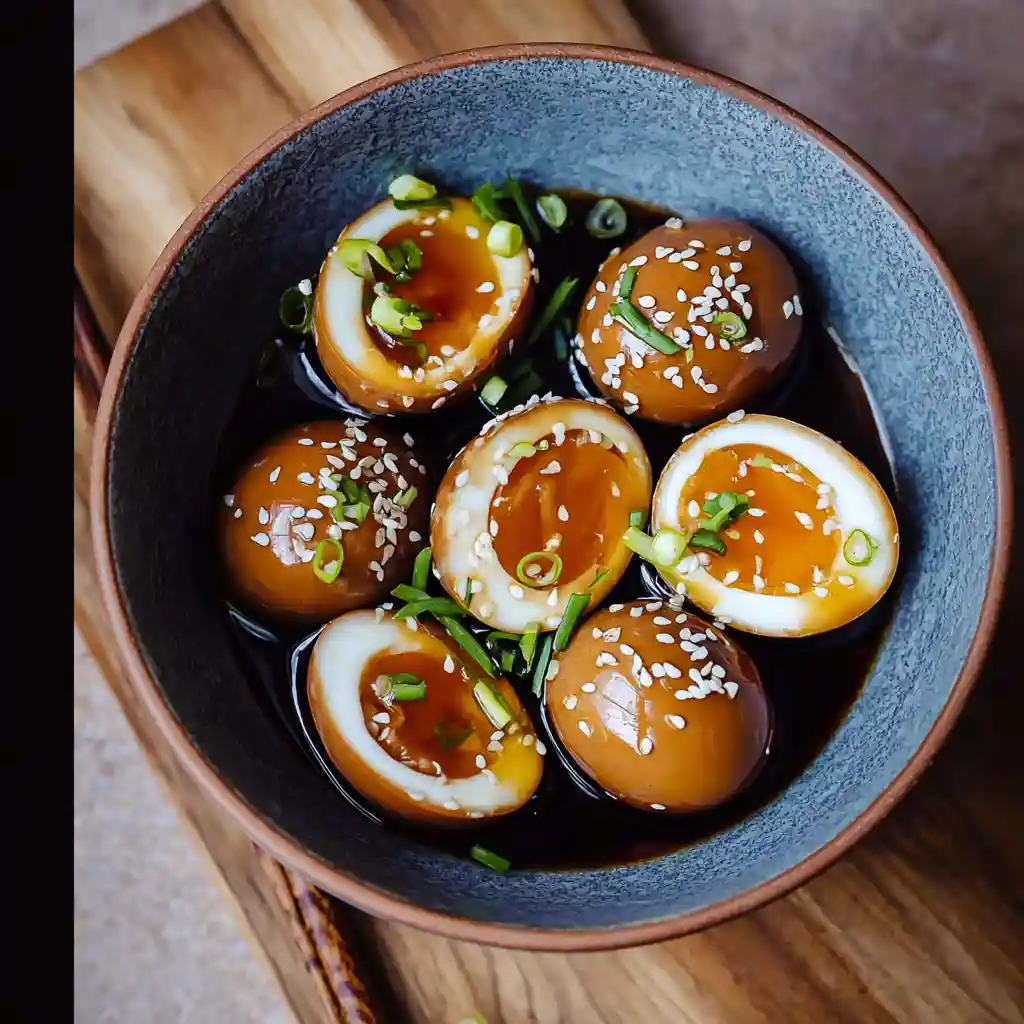
- Remove the eggs from the liquid and serve as desired. I love them sliced in half with a bit of fresh cracked pepper, sesame oil, pickled red onion, and diced scallions. They’re also fantastic over ramen, rice, or a salad for a quick, filling meal.
Nutrition
Notes
Tried this recipe?
Let us know how it was!Why You’ll Love These Soy Sauce Eggs
I think you’ll find these eggs are a winner for many reasons:
- They have a delicious umami flavor that elevates any dish.
- These are perfect for meal prep; make a batch on Sunday and enjoy them all week.
- They offer versatile serving options, from ramen topping to a quick snack.
- The recipe is easy to make with minimal effort and ingredients.
The Secret to Perfect Soy Sauce Eggs
The key to amazing soy sauce eggs lies in a perfect balance of savory, sweet, and slightly spicy flavors, plus a good long soak. I use low-sodium soy sauce as the base, adding water, apple cider vinegar for a touch of tang, brown sugar for sweetness, and a hint of chili garlic sauce for a little kick.
The diced scallions add a fresh, vibrant note. Marinating the eggs overnight is crucial, letting the flavors penetrate deeply and creating that beautiful, rich color.
Ingredients
Here’s what you’ll need to make my soy sauce eggs:
- 1 cup low-sodium soy sauce
- 6 tablespoons water
- 3 tablespoons apple cider vinegar
- 2 tablespoons brown sugar
- 1 teaspoon chili garlic sauce
- 2 scallions (diced)
- 6 large hard boiled eggs (peeled (or soft boiled))
Note: I highly recommend using low-sodium soy sauce to control the saltiness. Feel free to use either hard-boiled or soft-boiled eggs based on your preference.
Why These Egg Choices Matter
I usually stick with standard large eggs for consistency, but don’t be afraid to experiment! Organic or free-range eggs might offer a slightly richer flavor, though the difference is subtle once they’re marinated. Ultimately, the best eggs are the ones you enjoy the most.
Step-by-Step Guide to Making Soy Sauce Eggs
Ready to dive in? Follow these simple steps for perfectly marinated soy sauce eggs.
Step 1: Prepare the Marinade
In a quart-sized jar or container (with a lid), whisk together the soy sauce, water, apple cider vinegar, brown sugar, chili garlic sauce, and scallions. Make sure everything is well combined.
Step 2: Add the Eggs
Place the peeled eggs in the soy sauce mixture, making sure they’re all submerged. This ensures even marinating.
Step 3: Marinate to Perfection
Seal the container with the lid and marinate in the refrigerator overnight/8 hours. Marinating for just a few hours will give you a subtle salty soy sauce flavor, while soaking overnight will make the color and flavor much deeper and better.
Step 4: Serve and Enjoy
Remove the eggs from the liquid and serve as desired. I love them sliced in half with a bit of fresh cracked pepper, sesame oil, pickled red onion, and diced scallions. They’re also fantastic over ramen, rice, or a salad for a quick, filling meal.
Mastering the Art of Boiling Eggs (Preventing Problems)
Boiling eggs seems simple, but a few tricks can make all the difference. To prevent cracks, try bringing the water to a boil before gently adding the eggs. You can also add a splash of vinegar or a pinch of salt to the water.
For easy peeling, shocking the eggs in ice water immediately after boiling works wonders. Using slightly older eggs can also help. Achieve perfect doneness by cooking them for specific times: about 6-7 minutes for soft-boiled, 8-9 minutes for medium-boiled, and 10-12 minutes for hard-boiled. If you want more easy recipes, check out the main dishes category for a variety of different meal options.
Soy Sauce Variations: Elevating Your Flavor
Soy sauce is the star of this recipe, but different types can offer unique nuances. I prefer low-sodium soy sauce for this recipe because it allows me to control the saltiness and adjust other flavors accordingly. According to the University of Rochester Medical Center, one tablespoon of soy sauce made from soy and wheat contains approximately 1 gram of protein.
Light soy sauce has a brighter, saltier flavor, while dark soy sauce offers a deeper color, is less salty, and has a slightly sweeter profile. Tamari is a gluten-free option, and is often richer and less salty than regular soy sauce. Each of these will subtly change the outcome of your soy sauce eggs, so feel free to experiment and find your favorite!
If you are a fan of scallions, you should also check out this Easy Chinese Scallion Chicken: A Simple Recipe.
Marinade Variations: Spice, Sweetness, and More
Want to mix things up? Try these marinade variations:
| Variation Name | Ingredients to Add/Modify | Flavor Profile |
|---|---|---|
| Spicy Gochugaru Kick | 1 tsp Gochugaru (Korean chili flakes), reduce brown sugar by 1 tbsp | Adds heat and a smoky depth. |
| Honey-Ginger Twist | 1 tbsp honey, 1 tsp grated fresh ginger | Creates a sweeter, more complex, and aromatic marinade. |
Troubleshooting Common Soy Sauce Egg Problems
Encountering issues? Don’t worry, I’ve got you covered! If your eggs are rubbery, it means they’re overcooked. Be sure to follow my time guidelines from my “Mastering the Art of Boiling Eggs” section.
If your eggs are hard to peel, refer back to the “Mastering the Art of Boiling Eggs” section for my peeling tips. If the marinade isn’t penetrating the eggs, make sure the eggs are fully submerged and that you’re marinating them for a sufficient amount of time. Another delicious dish, also featuring soy sauce, is this Ultimate Korean Ground Beef Bowl: Quick & Easy Dinner.
Global Cousins: Similar Marinated Egg Dishes
Soy sauce eggs have delicious relatives in other Asian cuisines. Korean Gyeran Jjim, while steamed, shares the concept of infused flavor. The closest comparison is Japanese Ajitsuke Tamago, a marinated egg served with ramen.
Serving Suggestions: Beyond the Basics
Soy sauce eggs are fantastic on their own, but let’s explore some unexpected ways to enjoy them! Try them in sandwiches as an egg salad variation or on top of avocado toast for a protein boost. Add them to a charcuterie or appetizer board for a unique twist, mix them into potato salad, or use them as a flavorful topping for grain bowls.
Storing Your Soy Sauce Eggs
Store your soy sauce eggs in an airtight container in the refrigerator for up to 5 days.
Reusing the marinade is generally not recommended due to potential bacterial growth from the eggs.
What to Do With Leftover Marinade
Don’t toss that flavorful marinade! Use it as a base for salad dressing, to flavor stir-fries, or for marinating tofu or chicken. You can also add it to soups or stews for extra depth.
Health and Nutrition Spotlight
Soy sauce eggs offer several nutritional benefits, primarily protein from the eggs and a satisfying umami flavor. However, be mindful of the high sodium content, especially if you’re not using low-sodium soy sauce.
Frequently Asked Questions
Can I use store-bought hard-boiled eggs?
Yes, you can. Just make sure they are peeled.
How long can I marinate the eggs?
I recommend at least 8 hours, but you can marinate them for up to 24 hours for a more intense flavor.
What happens if I don’t peel the eggs before marinating?
The marinade won’t penetrate the eggs effectively.
Can I freeze soy sauce eggs?
Freezing is not recommended as it can alter the texture of the eggs.
Conclusion
Soy sauce eggs are a simple yet incredibly delicious and versatile dish that I know you’ll love. This recipe is a must-try for anyone looking to add a burst of umami to their meals. I hope you enjoy this recipe as much as I do!
Now, I want to hear from you! Try out this recipe and share your results in the comments below. Do you have any questions? Ask away! And don’t forget to tag Delish Map on social media when you share your culinary creations. Happy cooking!
Printable Recipe Card
Want just the essential recipe details without scrolling through the article? Get our printable recipe card with just the ingredients and instructions.