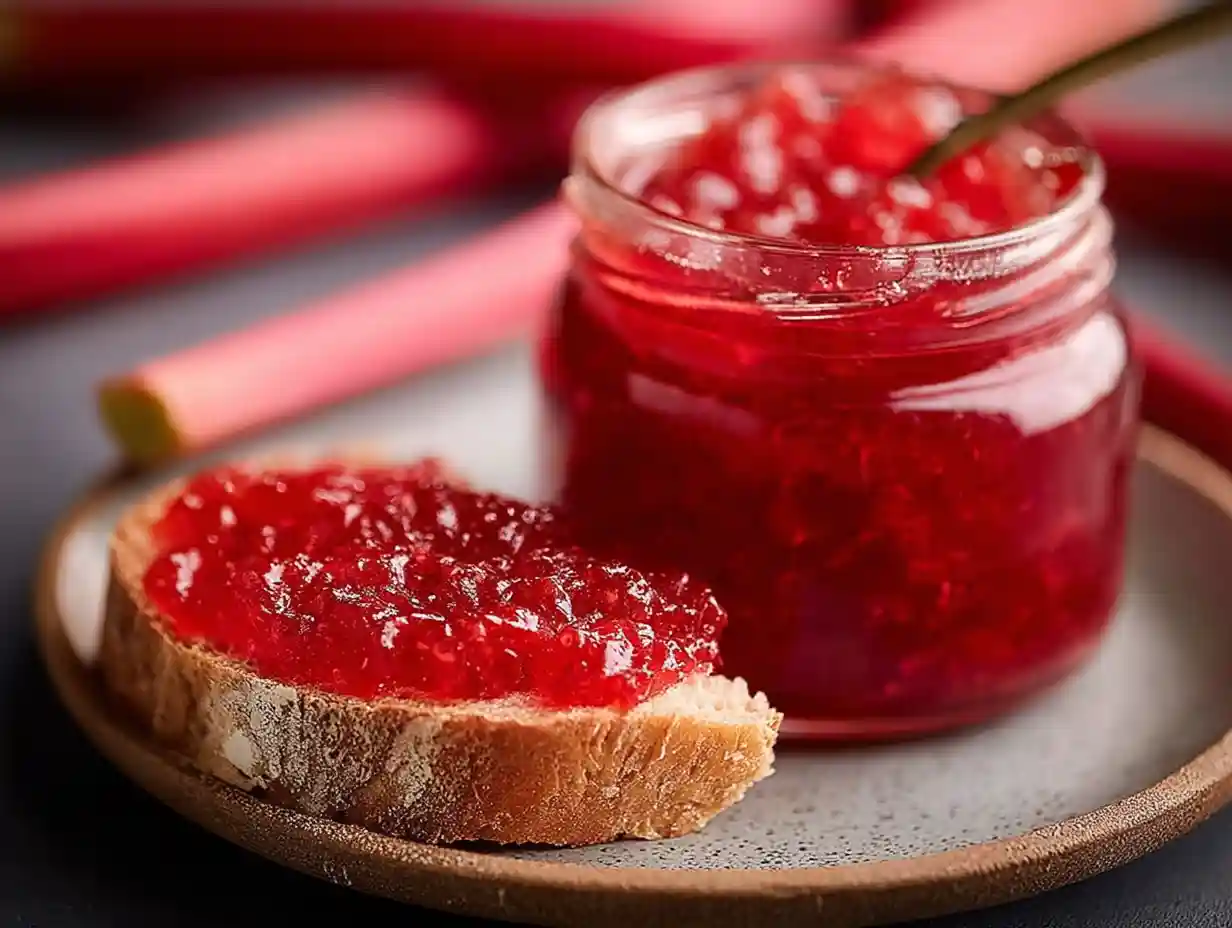
There’s something truly magical about a jar of homemade jam, isn’t there? For me, it captures a moment, a season, and a whole lot of heart in one sweet, vibrant spread. I absolutely adore rhubarb; its unique tartness is just incredible. That’s why I’m so excited to share my go-to recipe for The Best Rhubarb Jam with you today.
This recipe delivers a jam that’s bursting with bright, sweet-tart flavor and boasts the most gorgeous ruby-red color. It might seem like a project, but I promise it’s a surprisingly simple process. The total active time, including a crucial maceration step, is approximately 1 hour and 45 minutes, making it a perfect weekend kitchen adventure.
Table of Contents

The Best Rhubarb Jam
Ingredients
Equipment
Method
- Sterilize the jars and lids for canning by boiling them in a large pot of water. Place a small plate in the freezer.
- In a large bowl, place the rhubarb, sugar, water, lemon juice, spent lemon halves, and lemon seeds (which provide the necessary pectin for thickening), and let rest on the counter for 1 hour. (If you want to make your life easier later on, tuck the lemon seeds in a tea ball or tie them in cheesecloth to make for simple retrieval.)
- After 1 hour, dump the rhubarb mixture into a pot and bring to a boil over medium-high heat. Continue to cook, stirring the jam constantly, for about 15 minutes. Skim any foam from the surface of the jam as it arises.
- After 15 minutes, reduce the heat to medium to keep the jam at a constant simmer, stirring frequently, to make sure the jam isn’t scorched at the bottom of the pot.
- After a total of 30 minutes simmering, check to see if your jam has set by taking the plate from the freezer and dolloping a small spoonful of the jam on the plate. The jam is set when it holds its shape on the cool plate rather than turning into a blob. If it seems a little runny, continue cooking over medium-low heat until set.
- Remove the lemon halves and seed bag and toss them in the compost or trash.
- If using the rhubarb jam within a week or two, ladle the jam into the sterilized jars, filling them to the bottom-most ring at the top of the jar. Gently tap the bottom of each jar on the counter to release any air bubbles. Using a damp clean towel, wipe the rims of the jars and secure the lids and rings. Place in the refrigerator and use to your heart’s content.
- If canning the rhubarb jam and using it over the next year, ladle the jam into the sterilized jars, filling them to the bottom-most ring at the top of the jar. Gently tap the bottom of each jar on the counter to release any air bubbles. Using a damp clean towel, wipe the rims of the jars and secure the lids and rings. Continue with the following steps.
- Process the jars of rhubarb jam in a water bath for 5 minutes if using pint jars, 10 minutes if using quart jars. Use tongs to remove the jars from the pot and let them cool on the counter.
- When the jam is room temperature, remove the metal rings, check for proper seals, and label with the date and contents. Store in a cool, dark pantry for up to 1 year.
Nutrition
Tried this recipe?
Let us know how it was!Why You’ll Love Making The Best Rhubarb Jam
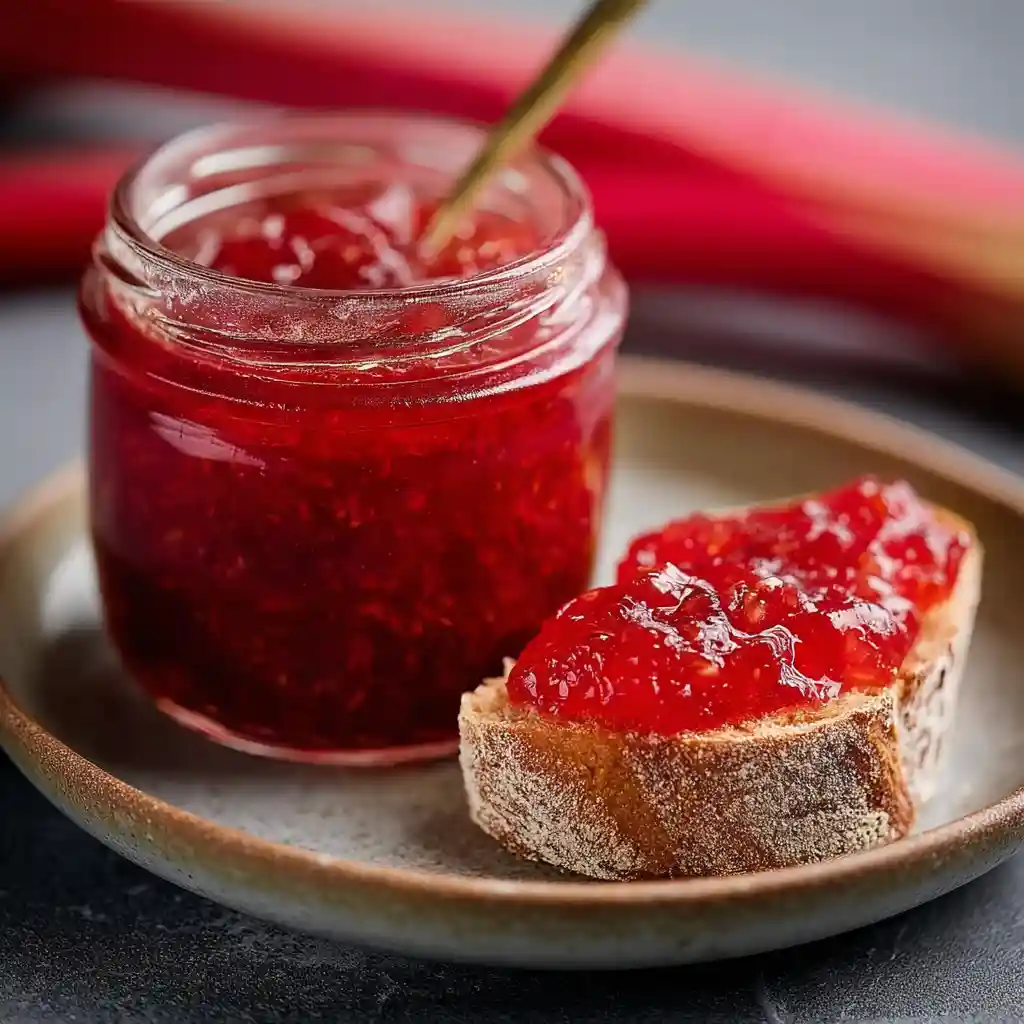
I’ve made countless batches of jam over the years, and I truly believe this rhubarb jam stands out for a few wonderful reasons:
- Vibrant, Natural Color: By choosing red rhubarb, I ensure my jam has a stunning, jewel-toned hue that looks as good as it tastes. It truly brightens up any breakfast or dessert.
- Perfect Set Without Added Pectin: I love that this recipe uses the natural pectin from the lemon seeds to achieve a beautiful, firm set. It’s a traditional method that works like a charm, meaning no need for store-bought pectin.
- Irresistible Sweet-Tart Balance: The combination of rhubarb’s tanginess with just the right amount of sugar creates a flavor profile that is wonderfully balanced and never overly sweet. It’s simply delicious.
- Easily Achievable Success: This recipe breaks down the process into clear, manageable steps, making it accessible for even new jam makers. I’ve refined it to be incredibly forgiving and reliable.
Understanding Rhubarb: Selection, Seasonality, and Preparation
When I’m making jam, selecting the best ingredients is key, and rhubarb is no exception. I always look for stalks that are firm, crisp, and free from blemishes or soft spots. The color can vary depending on the variety, but generally, the redder the stalk, the more vibrant your jam will be.
There are several varieties of rhubarb, with ‘Victoria’ and ‘Canada Red’ being common. Redder varieties like ‘Canada Red’ naturally lend a beautiful pink or red color to the jam, which I prefer. Green varieties will still yield delicious jam, but the color will be more muted. Rhubarb is typically in season from early spring through early summer, making it a wonderful ingredient to preserve when it’s at its peak.
For preparation, I rinse my rhubarb thoroughly and trim off any leafy parts, as rhubarb leaves are toxic. I also snip off the very ends of the stalks. Peeling rhubarb is rarely necessary, especially for younger, tender stalks. If I encounter very thick, fibrous, or older stalks, I might peel them lightly with a vegetable peeler to ensure a smoother texture in my jam. However, for this recipe, I usually find that a good rinse and chop are all that’s needed.
The Science Behind The Best Rhubarb Jam: Pectin, Acid, and Sugar
Achieving that perfect, spoonable jam consistency is a little bit of science and a lot of magic. Rhubarb itself is naturally quite low in pectin, the natural gelling agent found in fruits. This is where my careful balance of ingredients comes in.
To help the jam set beautifully without commercial pectin, I rely on two key elements: sugar and acid. Sugar plays a dual role; it preserves the fruit and contributes to the gelling process by drawing out moisture. The lemon juice provides the necessary acid, which is crucial for activating any natural pectin present in the fruit. This acidity allows the pectin molecules to bond together and form the gel structure.
My special trick, and one I love, is reserving the lemon seeds. Lemon seeds are a fantastic natural source of pectin! By including them in the cooking process, I give my jam an extra boost of that natural gelling power. This clever step ensures my rhubarb jam sets perfectly every time, creating that delightful texture I crave.
Essential Ingredients for The Best Rhubarb Jam
I keep my ingredient list simple for this jam, focusing on quality and freshness to let the rhubarb truly shine.
- 4 pounds rhubarb, preferably red (trimmed, rinsed, and cut into small chunks (about 16 cups)): I always aim for the freshest, crispest rhubarb I can find. Redder stalks contribute to a more beautiful, vibrant jam color, which I adore. Cutting them into small chunks helps them break down evenly during cooking.
- 4 cups granulated sugar: I use standard granulated sugar. It’s essential for both sweetening the jam to balance rhubarb’s tartness and for its preservative qualities, ensuring my jam lasts.
- 1 1/2 cups cold water: This helps create the initial liquid base for the jam, preventing the rhubarb from scorching at the beginning of the cooking process before it releases its own juices.
- 1 lemon (halved and juiced, seeds reserved): I use a fresh lemon, both for its bright, tart juice and, crucially, for its seeds. The juice provides the essential acid for setting, and those reserved seeds are my secret weapon for natural pectin.
How to Make The Best Rhubarb Jam: Step-by-Step Instructions
Making this jam is a process I truly enjoy, and I’m going to walk you through each step with all my tips for success.
- Sterilize your jars and prepare for setting: I start by sterilizing the jars and lids for canning. I boil them in a large pot of water to ensure they are clean and free of any bacteria that could cause spoilage. While those are sterilizing, I place a small plate in the freezer. This plate will be vital later for checking if my jam has set properly.
- Macerate the rhubarb: In a large bowl, I combine the rhubarb, sugar, water, freshly squeezed lemon juice, the spent lemon halves, and those reserved lemon seeds. I make sure to include the lemon seeds because they provide the necessary pectin for thickening the jam. Then, I let this mixture rest on the counter for 1 hour. This maceration step is wonderful; it allows the sugar to draw out the natural juices from the rhubarb, creating a flavorful syrup before cooking even begins. If I want to make my life easier later on, I tuck the lemon seeds in a tea ball or tie them in cheesecloth for simple retrieval.
- Initial boil: After 1 hour, I dump the entire rhubarb mixture into a large pot and bring it to a boil over medium-high heat. I make sure to continue to cook, stirring the jam constantly, for about 15 minutes. This initial high heat helps to quickly dissolve the sugar and begin the gelling process. As it boils, I skim any foam from the surface of the jam as it arises. Skimming helps ensure a clearer, more attractive finished jam.
- Simmer and thicken: After 15 minutes, I reduce the heat to medium to keep the jam at a constant simmer. I continue stirring frequently to make sure the jam isn’t scorched at the bottom of the pot. Stirring prevents sticking and promotes even cooking, which is crucial for a consistent texture.
- Check for set: After a total of 30 minutes simmering, I check to see if my jam has set. I take that plate from the freezer and dollop a small spoonful of the hot jam onto it. The jam is set when it holds its shape on the cool plate rather than turning into a runny blob. If it seems a little runny, I continue cooking over medium-low heat, checking every few minutes until it reaches that perfect set. Patience here is key!
- Remove pectin sources: Once the jam is set, I carefully remove the lemon halves and the seed bag (if I used one). I toss them in the compost or trash, as their pectin contribution is complete.
- For short-term storage: If I plan on using the rhubarb jam within a week or two, I ladle the jam into the sterilized jars, filling them to the bottom-most ring at the top of the jar. I gently tap the bottom of each jar on the counter to release any air bubbles. Using a damp, clean towel, I wipe the rims of the jars to ensure a clean seal and then secure the lids and rings. I place these jars in the refrigerator and use them to my heart’s content.
- For long-term canning: If I’m canning the rhubarb jam to use over the next year, I ladle the jam into the sterilized jars, filling them to the bottom-most ring at the top of the jar. Again, I gently tap the bottom of each jar on the counter to release any air bubbles. Using a damp, clean towel, I wipe the rims of the jars and secure the lids and rings. I then continue with the following processing steps.
- Water bath processing: I process the jars of rhubarb jam in a water bath. For pint jars, I process them for 5 minutes, and for quart jars, I process them for 10 minutes. This step creates a vacuum seal, making the jam shelf-stable. I use tongs to carefully remove the hot jars from the pot and let them cool undisturbed on the counter.
- Final storage: When the jam is room temperature, I remove the metal rings, check for proper seals (the lid should be concave and not flex when pressed), and label them with the date and contents. I store these beautifully sealed jars in a cool, dark pantry for up to 1 year.
How to Tell Your Rhubarb Jam is Perfectly Set
Knowing when your jam has reached that magical setting point is crucial, and the plate test is my absolute favorite method! After my jam has been simmering for the recommended time, I take a small, chilled plate from the freezer. I drop a small spoonful of the hot jam onto the cold plate.
Then, I let it sit for about 30 seconds to cool slightly. After that, I push the jam with my finger. If the jam wrinkles or holds its shape without running back together, it’s perfectly set! It should feel slightly firm, not watery. If it’s still runny and doesn’t wrinkle, I know it needs a little more cooking time. I keep the heat low and retest every few minutes until I achieve that perfect consistency.
While I primarily use the plate test, some experienced jam makers also look for the “sheeting test,” where the jam drips off a spoon in a “sheet” rather than individual drops, or use a candy thermometer to reach 220°F (104°C) at sea level, but I find the wrinkle test to be the most intuitive for my home kitchen.
Storing Your Homemade Rhubarb Jam: Refrigerate, Freeze, or Can
Once I’ve made a delicious batch of rhubarb jam, I have a few options for keeping it fresh and enjoying it for as long as possible.
Refrigeration: For jam I plan to use quickly, refrigeration is my go-to. I simply ladle the warm jam into clean, sterilized jars, leaving about half an inch of headspace. I secure the lids tightly and let the jars cool completely on the counter before transferring them to the refrigerator. My refrigerated rhubarb jam will last for about 2-3 weeks. I always watch for any signs of spoilage like mold, an off-smell, or unusual discoloration, and if I see any, I discard it immediately.
Freezing: Freezing is a fantastic option for longer-term storage without the need for water bath canning. I fill freezer-safe containers or jars, leaving at least an inch of headspace to allow for expansion. I seal them tightly and let them cool completely before placing them in the freezer. Frozen rhubarb jam will maintain its quality for up to 6 months. When I’m ready to use it, I just let it thaw in the refrigerator overnight.
Water Bath Canning: For truly long-term, shelf-stable storage, water bath canning is the method I rely on. After sterilizing my jars and lids, I ladle the hot jam into the jars, leaving the recommended headspace. I wipe the rims clean, apply the lids and rings, and process them in a boiling water bath for the specified time (5 minutes for pint jars, 10 minutes for quart jars). This creates a vacuum seal that keeps the jam safe and delicious.
Once cooled, I check the seals; the lids should be concave and not flex when pressed. Properly canned and sealed rhubarb jam can be stored in a cool, dark pantry for up to 1 year. If a jar doesn’t seal, I simply store it in the refrigerator and use it within a few weeks.
Creative Ways to Enjoy The Best Rhubarb Jam
My rhubarb jam is so much more than just a spread for toast, though it’s absolutely fantastic there! I love experimenting with it in all sorts of dishes.
- Cheese Pairings: I find it incredible with a creamy, tangy goat cheese or a rich brie. The sweet-tartness of the jam cuts through the richness of the cheese beautifully. It’s a delightful addition to any cheese board.
- Charcuterie Boards: For a more elaborate spread, I often include a small bowl of my rhubarb jam on my charcuterie boards. It pairs wonderfully with cured meats, adding a burst of fresh flavor.
- Dessert Enhancer: I love swirling it into plain yogurt or topping a scoop of vanilla ice cream. It’s also heavenly dolloped over a classic cheesecake, panna cotta, or used as the vibrant filling for ultimate homemade rhubarb bars.
- Cocktail Mixer: For a sophisticated drink, I’ve mixed a spoonful of rhubarb jam into a gin or vodka cocktail. It adds a unique fruity sweetness and beautiful color.
- Savory Dishes: Don’t limit yourself to sweet applications! I’ve used it as a glaze for roasted pork loin or chicken, and it adds a fantastic tangy counterpoint to savory main dishes. It can even be stirred into a pan sauce for an unexpected depth of flavor.
Rhubarb Jam Variations to Explore
I love this classic rhubarb jam, but sometimes I enjoy playing around with the flavors. Here are a few variations I’ve tried and loved:
| Variation Name | Added Ingredients | Brief Instructions |
|---|---|---|
| Spiced Rhubarb Jam | 1/2 tsp ground cinnamon, 1/4 tsp ground ginger, 2-3 whole star anise | I add the spices to the rhubarb mixture during the maceration step. I remember to remove the whole star anise along with the lemon halves before jarring the jam. |
| Strawberry Rhubarb Jam | 2 pounds fresh strawberries, hulled and quartered | I reduce the rhubarb to 2 pounds and add the quartered strawberries to the macerating mixture. The strawberry adds a lovely sweetness and deepens the color, similar to what you’d find in an easy berry crisp. |
| Rhubarb Ginger Jam | 2-3 inches fresh ginger, peeled and finely grated | I add the grated ginger to the rhubarb mixture during the maceration step. The pungent warmth of the ginger beautifully complements the tartness of the rhubarb. If I prefer, I can also add thinly sliced ginger and remove it along with the lemon pieces before canning. |
Troubleshooting Common Rhubarb Jam Issues
Even with the best recipes, sometimes things don’t go exactly as planned. I’ve learned a few tricks over the years for troubleshooting common jam-making issues:
Jam Too Runny: This is probably the most common issue I hear about. The likely cause is insufficient pectin activation or too much moisture. I’ve found the best solution is to return the jam to the pot and gently simmer it again over medium-low heat, stirring frequently. I continue to perform the cold plate test every few minutes until it sets properly. Sometimes, adding a bit more lemon juice (about 1-2 tablespoons) can also help activate the pectin further.
Jam Too Stiff: If your jam is too stiff, it usually means it was cooked too long, and too much moisture evaporated. Unfortunately, once pectin has set too firmly, it’s hard to reverse. I might try gently reheating the jam with a tiny splash of water (a tablespoon or two) to loosen it slightly, but it might not fully regain a soft consistency. Next time, I simply reduce the cooking time slightly.
Crystallization: Crystallization can happen if there’s too much sugar in relation to the fruit, or if the jam wasn’t cooked fast enough, causing the sugar to concentrate unevenly. I ensure my sugar measurements are precise. If it occurs, I can try gently reheating the jam in a pot with a tablespoon of water until the crystals dissolve, then re-jarring it.
Syrup Separation: If I notice a layer of syrup separating from the fruit in my jars, it often means the fruit wasn’t cooked long enough to fully integrate with the syrup, or the jam wasn’t adequately stirred during the cooling process before jarring. I ensure I stir my jam well throughout the cooking process and before filling jars. While separated jam is usually safe to eat, it won’t have the ideal texture.
Altitude Effects on Jam Setting: Something I’ve learned, especially for those living at higher elevations, is that altitude affects boiling points. Water boils at a lower temperature the higher you go. This means that jam needs to cook longer to reach its setting point, or it might require a higher temperature reading on a candy thermometer. For every 1,000 feet above sea level, I increase my boiling water bath processing time by 1 minute, and for jam setting, I might aim for a temperature a degree or two lower than 220°F, or simply rely more heavily on the visual cold plate test.
FAQs About Rhubarb Jam
I get a lot of questions about jam making, and I’m happy to share my answers to some common ones about rhubarb jam:
Do I have to peel rhubarb for jam?
No, I almost never peel rhubarb for jam! Younger, tender stalks don’t need it, and even slightly older stalks often soften beautifully during cooking. The skin also contributes to the jam’s lovely color. I only peel if the stalks are exceptionally thick or fibrous, or if I want an absolutely smooth texture, but it’s not a required step.
Why isn’t my jam setting?
If your jam isn’t setting, it’s likely due to a lack of pectin, insufficient acid, or not enough cooking time. I’ve found this recipe, with its lemon juice and lemon seeds, provides ample pectin and acid. So, usually, it just needs more time simmering on the stovetop. I keep testing with the cold plate method until it reaches that perfect wrinkle!
Can I reduce the sugar?
While I understand the desire to reduce sugar, I don’t recommend significantly reducing the sugar in this recipe. Sugar plays a vital role in both preserving the jam and helping it set properly. Too little sugar can result in a jam that doesn’t set, has a shorter shelf life, and potentially compromises its safety if canned. This recipe’s sugar level is balanced for flavor and function.
How long does homemade rhubarb jam last?
The shelf life depends on how you store it. Refrigerated, my rhubarb jam lasts about 2-3 weeks. If frozen, it’s good for up to 6 months. When properly water bath canned and sealed, it can last for up to 1 year in a cool, dark pantry.
What kind of rhubarb is best for jam?
I always prefer using red rhubarb varieties, such as ‘Canada Red’ or ‘Cherry Red’. These varieties give the jam a beautiful, vibrant pink or ruby-red color, which I find so appealing. Green varieties will still make delicious jam, but the color will be more subdued. Ultimately, fresh and firm stalks are always the best choice, regardless of exact variety.
I truly hope you feel inspired to give “The Best Rhubarb Jam” a try in your own kitchen! There’s nothing quite like opening a jar of homemade preserves, knowing you created something so delicious with your own hands. It’s a taste of sunshine, comfort, and pure joy that I love to share with everyone.
Please, tell me all about your jam-making adventures! Do you have a favorite way to enjoy rhubarb jam? Or perhaps a question that popped up while you were cooking? I’d love to hear from you in the comments below. Happy cooking, friends!
Printable Recipe Card
Want just the essential recipe details without scrolling through the article? Get our printable recipe card with just the ingredients and instructions.